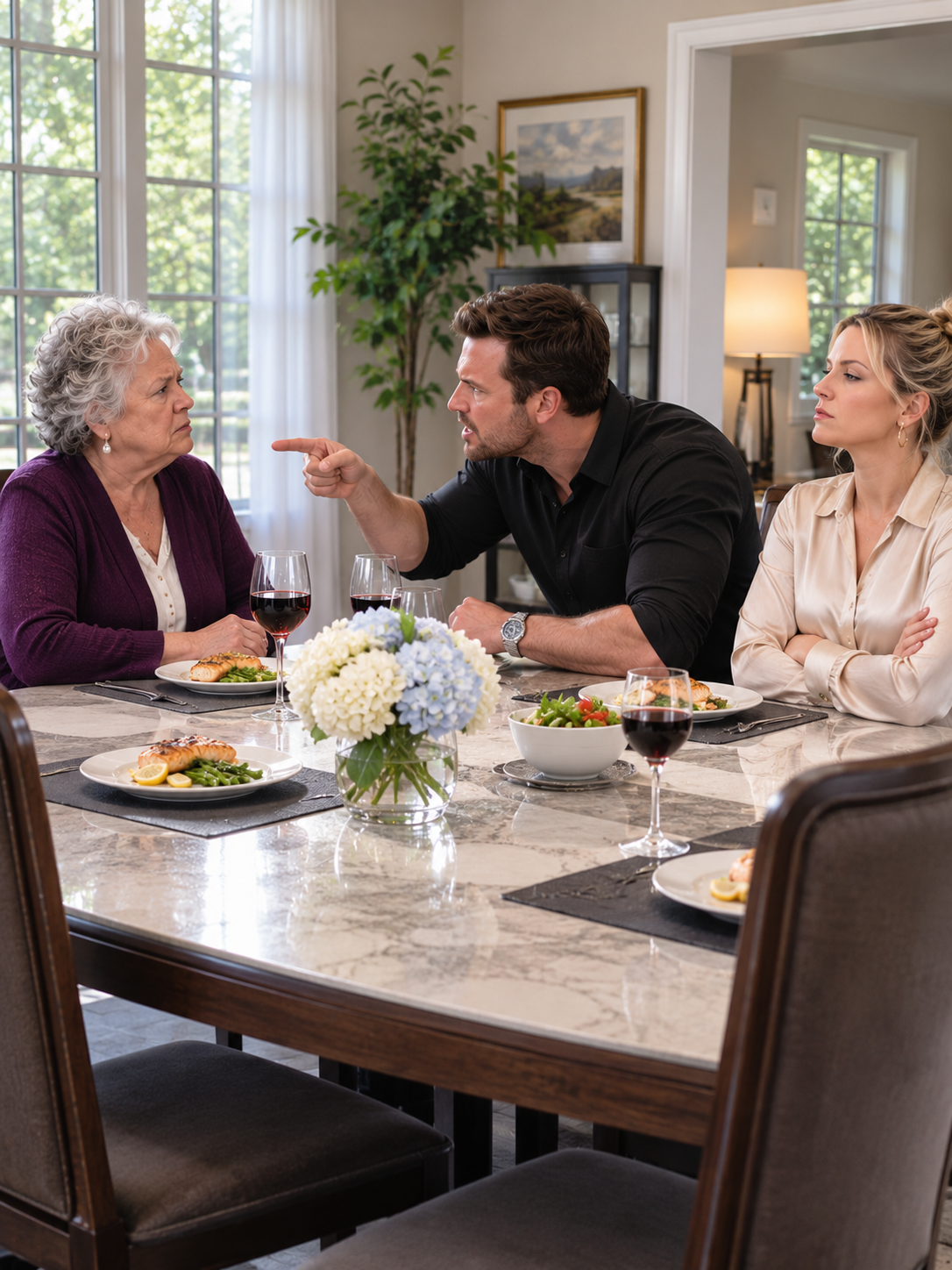
My 36-year-old son called me a freeloader during Sunday dinner, even though he, his wife, and their child had lived in my house rent-free for two years.
I calmly put down my fork and gave them 24 hours to move out.
They laughed, certain I’d change my mind.
But the next morning, when Daniel reached for my SUV keys and found the hook empty, he realized I wasn’t joking.
I could hardly believe those words had come from my own son.
For the past two years, Daniel, his wife Marissa, and their nine-year-old son Oliver had been staying in the home my late husband and I had worked so hard to buy.
I paid the mortgage, power, water, insurance, internet, and almost every grocery bill.
I looked after Oliver whenever they needed someone to watch him.
I’d even let Daniel borrow my SUV and use my credit card.
Yet somehow, he believed I was the one taking advantage of everyone.
Two years before, Daniel had lost his apartment after making several bad financial decisions.
I was sixty-six, a widow, and living alone.
When he phoned to ask if his family could move in for a short time, I said yes immediately.
They assured me it would only last a few months.
In the beginning, they helped around the house.
They cleaned dishes and sometimes bought food.
But gradually, even those little contributions stopped.
Daniel abandoned his things all over the house.
Marissa demanded costly groceries and brought guests over without asking me first.
They took over the living room whenever they wanted and slowly began treating me as if I didn’t belong there.
Then Sunday dinner happened.
After I gave them twenty-four hours to move out, Daniel rolled his eyes.
“Mom, stop being dramatic. Marissa and I actually work. All you do is garden instead of helping take care of Oliver.”
I gently set my fork next to my plate.
“Twenty-four hours,” I said again.
Marissa looked at me in disbelief.
“You can’t seriously mean you’re kicking us out?”
“That’s precisely what I mean.”
Daniel chuckled.
“By tomorrow morning, you’ll change your mind.”
But I knew my decision was final.
The next morning, they walked downstairs behaving as if nothing had happened.
Marissa pulled open the refrigerator.
“Clara, are you getting groceries today? We need oat milk, and I’d like salmon tonight.”
“No.”
She turned toward me.
“Then what are we supposed to eat?”
“Anything you’re willing to pay for yourselves.”
Daniel gave me a confused look.
“What’s wrong with you, Mom?”
“You’ve got twenty hours left. I’d suggest you begin packing.”
What neither of them realized was that I’d already taken action.
I’d canceled Daniel’s access to my credit card.
I’d taken his name off my car insurance.
And I’d stopped paying for their premium subscriptions.
As Daniel headed for the entrance, he reached toward the hook where the SUV keys usually hung.
It was empty.
“Where are my keys?”
“I have them.”
“Mom, I’m already running late!”
“Then catch the bus.”
“I need that car to get to work!”
“It’s my vehicle, Daniel.”
Marissa insisted that I hand over the keys.
Instead, I went into my study.
“Eighteen hours,” I told them.
Daniel slammed the front door before walking toward the bus stop.
Around midday, Marissa returned from her fitness class accompanied by two friends.
A little later, I heard her yelling from the kitchen.
“Clara! Where did all the food go?”
I’d moved the groceries I’d paid for into storage.
“I was going to prepare snacks for my friends!” she complained.
“Then feel free to purchase what you need.”
Her friends looked at each other uncomfortably.
A few minutes later, they both made excuses and left.
Marissa was livid.
“You completely humiliated me!”
“You did that yourself.”
“I’m calling Daniel!”
“Fifteen hours.”
At two o’clock that afternoon, my phone started ringing.
It was Daniel, calling from a restaurant.
“Mom! Why did my credit card get declined?”
“Because I removed your access.”
“I’m having lunch with clients! The bill is almost two hundred dollars, and my payment won’t go through!”
“That card belongs to me, Daniel.”
“You made me look like a fool in front of everyone!”
“Then you’ll have to figure out another way to pay.”
He confessed that he didn’t have enough cash.
I hung up.
For years, I’d rescued Daniel every time his financial decisions created problems.
That afternoon, I finally understood how my endless assistance had helped him avoid taking responsibility.
I gathered twenty empty cardboard boxes and left them outside his bedroom.
I didn’t put any of his belongings inside.
Packing was something he needed to handle himself.
I only provided the boxes.
At six that evening, Daniel and Marissa arrived home.
They noticed the boxes right away.
Neither was laughing this time.
I sat calmly at the dining table with a book.
Daniel stormed over.
“This has gone too far! You cut off my card, wouldn’t let me use the car, and embarrassed Marissa. We get it, you’re angry!”
Then he claimed the house was partly his because he’d grown up there.
I didn’t bother arguing.
I took out a folder and slid a document across the table.
The house deed.
Clara Bennett.
Only legal owner.
Daniel stared down at it without speaking.
“You didn’t grow up in this home,” I reminded him. “Your father and I bought it twelve years ago, long after you’d moved out.”
“But we’re family!”
“Being family doesn’t give you ownership of my home or access to my money.”
For the first time, Daniel seemed uncertain.
“You can’t honestly expect us to be homeless.”
“You had twenty-four hours to make arrangements.”
That’s when Marissa’s face suddenly changed.
A slight, confident grin spread across her lips.
She leaned toward me and stared straight into my eyes.
“You’re forgetting someone, Clara.”
My stomach twisted.
I immediately understood who she was talking about.
Oliver.
My nine-year-old grandson.
The little boy I loved more than nearly anyone in the world.
And in that moment, I understood they were about to use him as their last chance to force me to give in.
The rest of the story is waiting in the comments below.
Drop a “YES” and give us a Like if you’re ready to find out!
I looked at Marissa.
She was still smiling.
Not warmly.
Not nervously.
It was the smile of someone who believed she’d finally found the one thing I couldn’t refuse.
“Oliver,” she said.
I folded my hands on the table.
“What about him?”
Marissa leaned back.
“You wouldn’t throw your own grandson out onto the street, would you?”
Daniel looked at his wife.
Then something changed in his expression.
He straightened.
“She’s right, Mom.”
I said nothing.
He continued.
“Oliver has school tomorrow. He has friends here. His whole life is here.”
I nodded.
“I know.”
Marissa’s smile widened.
“So I guess we’re staying.”
I looked at her for a long moment.
Then I closed the folder containing my deed.
“No.”
Her smile disappeared.
“What?”
“I said no.”
Daniel threw up his hands.
“Mom, are you even listening?”
“Very carefully.”
“Then how can you say that?”
I took a breath.
“Because Oliver is a child, and he deserves stability.”
Marissa nodded triumphantly.
“Exactly.”
I looked directly at her.
“And that stability is your responsibility as his parents.”
Silence.
Daniel stared at me.
I continued.
“I love Oliver. I will always love him. But I will not let you use him to demand unlimited access to my home, my money, and my car.”
Marissa’s cheeks reddened.
“You’re unbelievable.”
I nodded toward the boxes.
“You still need to make arrangements.”
Daniel slammed his palm against the table.
“Where are we supposed to go?”
I looked at him.
“You’re thirty-six years old.”
“So?”
“You and Marissa both work.”
He scoffed.
“You think apartments just appear overnight?”
“No.”
I paused.
“And I understand that finding a home takes time.”
He looked relieved.
Then I continued.
“But that doesn’t mean you can continue living here on the same terms.”
His face hardened.
I had already spoken with a housing attorney that morning.
I’d explained that Daniel, Marissa, and Oliver had lived in my home for two years without paying rent.
The attorney had warned me that, depending on the applicable law, they might have occupancy or tenancy rights even without a written lease.
I couldn’t simply put their belongings outside or change the locks after twenty-four hours.
I understood that.
My deadline was a demand that they begin making arrangements, not permission to ignore the law.
If they refused to leave voluntarily, I would use the proper notice and court procedures.
But I didn’t intend to spend another day pretending everything was normal.
I looked at Daniel.
“You have until tomorrow to tell me your plan for moving out.”
He frowned.
“And if we don’t?”
“Then I’ll begin the formal process.”
Marissa laughed bitterly.
“You’d take your own son to court?”
I met her eyes.
“If that’s what it takes to regain control of my home, yes.”
For several seconds, nobody spoke.
Then Daniel shook his head.
“Dad would be ashamed of you.”
The words struck harder than I expected.
My husband, Robert, had been gone for six years.
He’d worked long hours as an electrician.
He’d saved carefully.
He’d been the one who insisted we buy a house with a garden because he knew how much I loved growing roses.
When he died, I spent months unable to walk past his favorite chair without crying.
Daniel knew that.
He knew exactly where to aim.
I looked at my son.
“Your father would have expected you to respect your mother.”
Daniel’s expression tightened.
I continued.
“He would have helped you when you needed it.”
My throat ached.
“But he would never have expected me to spend my retirement being treated like an unwanted guest in my own home.”
Daniel looked away.
Marissa folded her arms.
“You’re making this all about yourself.”
I almost laughed.
For two years, everything had been about them.
Their bills.
Their schedules.
Their meals.
Their convenience.
Their friends.
Their plans.
And now that I was finally considering my own needs, I was selfish.
I stood.
“I’m going upstairs.”
Daniel frowned.
“We’re not finished.”
“Yes, we are.”
I picked up my book.
Then stopped.
“One more thing.”
They looked at me.
“Do not involve Oliver in this argument.”
Marissa rolled her eyes.
“He’s going to notice when his grandmother throws him out.”
I took a breath.
“He deserves an honest, age-appropriate explanation. Not threats, guilt, or blame.”
Neither answered.
I went upstairs.
And for the first time in two years, I locked my bedroom door.
Not because I was frightened.
Because I wanted one room in my own house where nobody could walk in demanding something.
That night, I barely slept.
I heard Daniel and Marissa arguing downstairs.
Their voices rose and fell.
At one point, I heard Marissa say, “She’ll cave. She always does.”
I closed my eyes.
She was right about one thing.
I always had.
When Daniel couldn’t pay his phone bill, I paid it.
When Marissa needed money for a car repair, I handed over my card.
When they wanted a weekend away, I watched Oliver.
When they forgot to buy groceries, I filled the refrigerator.
Every favor had been presented as temporary.
Every temporary arrangement had become permanent.
And every time I complained, Daniel reminded me that family was supposed to help family.
I had helped.
For two years.
Now I needed them to understand that help wasn’t the same as surrender.
The next morning, I went downstairs at seven.
Oliver was sitting at the kitchen table eating cereal.
He looked up.
“Morning, Grandma.”
I smiled.
“Good morning, sweetheart.”
He studied my face.
“Are you mad at Daddy?”
I felt my heart tighten.
I sat beside him.
“Your dad and I are having a disagreement.”
He looked down.
“About us living here?”
I nodded.
“Yes.”
His eyes filled.
“Do you want me to go away?”
My heart nearly broke.
I reached for his hand.
“Oh, Oliver.”
He looked at me.
“Never think that.”
A tear slid down his cheek.
I moved closer.
“I love you very much.”
He sniffled.
“Then why do we have to leave?”
I took a breath.
“Because grown-ups sometimes need to make changes so everyone can have a healthier home.”
He frowned.
“Did I do something wrong?”
“Absolutely not.”
I squeezed his hand.
“This is not your fault.”
He looked down.
I continued.
“You will always be my grandson. You will always be welcome to visit me when your parents and I make arrangements.”
His lip trembled.
“Even if we move?”
“Even if you move.”
He leaned against me.
I wrapped my arms around him.
And silently promised myself that whatever happened next, I would never make Oliver responsible for his parents’ choices.
A few minutes later, Daniel entered the kitchen.
He looked exhausted.
He opened the refrigerator.
Then stared at the shelves.
“Where’s the orange juice?”
I looked up.
“I didn’t buy any.”
He turned.
“Seriously?”
I nodded.
“You can pick some up.”
He shook his head.
“Unbelievable.”
Oliver looked between us.
I gently changed the subject.
“Sweetheart, did you finish your science project?”
He brightened slightly.
“Almost.”
I smiled.
“Then maybe you can show me after school.”
Daniel stared at me.
For a moment, he looked as though he wanted to argue.
Then he grabbed his jacket and left.
At nine, my attorney called.
Her name was Caroline Mercer.
She’d handled several estate matters for me after Robert died.
I trusted her judgment.
“Clara,” she said, “I’ve reviewed the information you sent.”
I sat at my desk.
“Okay.”
“Your son and his family have been living there long enough that we need to proceed carefully.”
I nodded.
“I understand.”
She continued.
“We’ll prepare the appropriate written notice and follow the applicable procedures. If they leave voluntarily, that may simplify matters. If not, we’ll address it through the legal process.”
I took a breath.
“Good.”
“And Clara?”
“Yes?”
“Don’t change the locks, shut off utilities, or remove their personal belongings while they still have lawful occupancy.”
“I won’t.”
She paused.
“You can establish boundaries concerning your personal property and finances, but we need to avoid anything that could be considered an unlawful eviction.”
I nodded.
“Understood.”
After the call, I sat quietly.
I wasn’t looking for revenge.
I didn’t want to frighten Oliver.
I didn’t want to humiliate Daniel.
I wanted my home back.
And I wanted my son to learn that being loved didn’t mean being entitled to everything I owned.
At eleven, Marissa came downstairs.
She was carrying a coffee cup.
“Clara, we need to talk.”
I looked up from my paperwork.
“Okay.”
She sat across from me.
For once, she wasn’t shouting.
“I know things got heated.”
I nodded.
“They did.”
She sighed.
“Daniel’s under a lot of pressure.”
I waited.
“He’s been having trouble at work.”
I frowned.
“What kind of trouble?”
She looked away.
“His hours have been reduced.”
I stared at her.
“Since when?”
She hesitated.
“A few months.”
I felt my stomach tighten.
Daniel had been telling me he was working overtime.
He’d been leaving early.
Coming home late.
Complaining about his exhausting schedule.
And now Marissa was telling me his hours had been cut.
I took a breath.
“Why didn’t he tell me?”
She shrugged.
“He didn’t want you worrying.”
I almost laughed.
That explanation didn’t sound like Daniel.
He’d never hesitated to tell me when he needed money.
Marissa leaned forward.
“We just need a little more time.”
I looked at her.
“You’ve had two years.”
She sighed.
“Clara, please.”
I studied her face.
For the first time, I noticed something beneath her irritation.
Fear.
Real fear.
I took a breath.
“Marissa, where has your money been going?”
Her expression changed.
“What?”
“You both work. You haven’t paid rent here. I’ve covered most household expenses.”
She looked down.
I continued.
“So where has the money gone?”
She didn’t answer.
I waited.
Finally, she whispered, “Daniel handles most of our finances.”
My stomach tightened.
“Do you know how much you have saved?”
She shook her head.
I stared.
“Marissa…”
Her eyes filled.
“I thought we had money.”
I leaned forward.
“What do you mean?”
She swallowed.
“Daniel told me we were saving for a down payment.”
I felt cold.
“How much?”
She hesitated.
“Forty thousand dollars.”
I sat completely still.
Forty thousand.
For months, Daniel had been telling me they couldn’t afford to contribute to groceries.
Couldn’t afford rent.
Couldn’t afford car insurance.
And now Marissa was telling me he’d claimed they had forty thousand dollars saved.
I took a breath.
“Have you seen the account?”
She shook her head.
My stomach sank.
“Marissa, you need to ask him.”
Her eyes filled.
“I did.”
I stared at her.
“When?”
“Last night.”
I swallowed.
“And?”
She began crying.
“He said the money’s gone.”
For several seconds, I couldn’t speak.
Then I asked, “Gone where?”
She covered her face.
“I don’t know.”
I sat quietly.
Then she whispered, “Clara, I think Daniel’s been lying to both of us.”
My heart began pounding.
I looked toward the hallway.
Then back at Marissa.
“What makes you think that?”
She took a shaky breath.
“Because I found a letter in his briefcase.”
I went still.
“What letter?”
She swallowed.
“From a debt collection company.”
I stared at her.
“How much?”
Her voice broke.
“Almost seventy thousand dollars.”
I closed my eyes.
Seventy thousand.
My son had lived in my home rent-free for two years.
Used my SUV.
Used my credit card.
Allowed me to pay nearly every household expense.
And somehow, he had accumulated almost seventy thousand dollars in debt.
I took a breath.
“Marissa, do you know what the debt is for?”
She shook her head.
“Not all of it.”
I waited.
She looked toward the stairs.
Then whispered, “But there’s something else.”
My stomach tightened.
“What?”
She hesitated.
“Daniel applied for another loan.”
I stared at her.
“When?”
“Last month.”
I swallowed.
“How much?”
She began crying harder.
“One hundred and twenty thousand dollars.”
I felt cold.
“What was he using as collateral?”
Marissa looked at me.
Her face had gone completely pale.
Then she whispered, “Clara, he put your house on the application.”
For several seconds, I couldn’t move.
I stared at the woman sitting across from me.
Then I asked the only question that mattered.
“Marissa, did Daniel sign my name?”
She covered her mouth.
And that was when I knew the problem was much bigger than an ungrateful son refusing to move out.
PART 2
I stared at Marissa.
She was crying quietly.
For a moment, I couldn’t hear anything except the ticking clock above the kitchen doorway.
My house.
The home Robert and I had worked so hard to buy.
The place where I’d raised Daniel.
The place where Oliver had spent the last two years growing up.
And now my son had apparently used it in a loan application without telling me.
I took a breath.
“Marissa, I need you to be very clear.”
She nodded.
“Did Daniel actually receive the money?”
She shook her head.
“I don’t know.”
I swallowed.
“Have you seen the application?”
“Yes.”
“Did it have my signature?”
Her eyes filled.
She nodded.
I closed my eyes.
For several seconds, I couldn’t speak.
Then I asked, “Did you sign anything?”
She shook her head quickly.
“No.”
I looked at her.
“Are you sure?”
“Yes.”
She swallowed.
“Clara, I didn’t know he was doing this.”
I sat quietly.
Then nodded.
“Okay.”
I wasn’t going to accuse her of something without evidence.
But I also wasn’t going to ignore what she’d told me.
I stood.
“I’m calling Caroline.”
Marissa looked frightened.
“Your lawyer?”
“Yes.”
She wiped her cheeks.
“Is Daniel going to get arrested?”
I took a breath.
“I don’t know.”
I looked toward the stairs.
“But we need to find out exactly what happened.”
Caroline answered immediately.
I explained everything.
The seventy thousand dollars in debt.
The missing savings.
The loan application.
The possibility that Daniel had used my name.
She listened without interrupting.
Then said, “Clara, first we need to verify whether any loan was actually funded and whether any lien or other document was recorded against your property.”
I nodded.
“Okay.”
“Second, preserve anything you have that shows what happened.”
I looked at Marissa.
“Understood.”
“And third, don’t sign any documents Daniel brings you.”
I almost laughed.
“I won’t.”
Caroline paused.
“Clara, if your signature was used without permission, that is serious. But we need the records before drawing conclusions.”
I nodded.
“I understand.”
She arranged for a title search and began making the appropriate inquiries.
Meanwhile, Marissa went upstairs to collect the documents she’d found.
She returned with copies of several letters and account statements.
I didn’t go searching through Daniel’s personal belongings.
I simply gave Caroline the information Marissa voluntarily provided and let her determine what could properly be used.
The records were troubling.
Daniel had several outstanding debts.
Some appeared to be credit cards.
Others were personal loans.
There were late fees.
Missed payments.
And collection notices.
Marissa sat beside me, staring at the numbers.
“I don’t understand.”
Her voice broke.
“We haven’t paid rent in two years.”
I nodded.
She continued.
“We should’ve saved so much money.”
I looked down.
“Yes.”
She began crying.
“I thought we were getting ahead.”
For a moment, I felt sorry for her.
Not because she’d treated me kindly.
She hadn’t.
But because I recognized the shock of discovering someone you trusted had been hiding important financial information.
I knew that feeling.
I’d experienced it after Robert died, when I had to sort through every account and bill.
The difference was that Robert had left everything organized.
He’d kept records.
Made plans.
And made sure I understood our finances.
Daniel had done the opposite.
He’d hidden problems until they became emergencies.
Then expected someone else to fix them.
I took a breath.
“Marissa, you need independent financial information.”
She nodded.
“And you may want your own legal advice.”
Her eyes widened.
“Do you think I need a lawyer?”
“I think you need to understand what debts you’re legally responsible for and what choices you have.”
She looked down.
Then nodded slowly.
“Okay.”
That afternoon, Daniel came home early.
He walked into the kitchen and stopped.
Marissa was sitting at the table.
I was beside her.
The documents were stacked in front of us.
His face changed immediately.
“What is this?”
I looked at him.
“Sit down, Daniel.”
He stared.
“Mom—”
“Sit down.”
For once, he did.
I folded my hands.
“Marissa told me about the debt.”
His jaw tightened.
He looked at his wife.
“You went through my stuff?”
She began crying.
“Daniel, where’s our savings?”
He looked away.
I waited.
He rubbed his face.
“It’s complicated.”
I nodded.
“Then explain.”
He stared at me.
“You wouldn’t understand.”
I took a breath.
“Try me.”
He sighed.
Then began talking.
At first, the explanation was confusing.
A failed investment.
A business opportunity.
Money he’d borrowed to cover losses.
Then more money borrowed to cover the first loans.
Eventually, the truth became clearer.
Daniel had invested in a speculative online trading venture.
He’d lost a substantial amount.
Instead of admitting it, he’d borrowed money to try to recover the losses.
When that failed, he’d borrowed again.
He’d used credit cards.
Personal loans.
And eventually, he’d considered borrowing against my home.
I stared at him.
“Daniel, why didn’t you tell us?”
He looked down.
“I thought I could fix it.”
I nodded slowly.
“And when you couldn’t?”
He didn’t answer.
I continued.
“You kept borrowing.”
He swallowed.
“Yes.”
Marissa began crying harder.
“Forty thousand dollars, Daniel.”
He looked at her.
“I know.”
“You told me we had forty thousand saved.”
He closed his eyes.
“I know.”
She stared at him.
“We have nothing?”
He didn’t answer.
Her face crumpled.
I looked at my son.
“Daniel, did you apply for a loan using my house?”
He went completely still.
For several seconds, nobody spoke.
Then he whispered, “Yes.”
My stomach tightened.
I took a breath.
“Did you have my permission?”
He shook his head.
I swallowed.
“Did you sign my name?”
His eyes filled.
He stared at the table.
Then whispered, “I thought you’d agree once I explained.”
My chest tightened.
“That wasn’t my question.”
He began crying.
I waited.
Finally, he nodded.
“Yes.”
For several seconds, I couldn’t speak.
My son.
The boy I’d raised.
The child I’d comforted through nightmares.
The teenager I’d helped through school.
The man I’d welcomed into my home when he lost his apartment.
He’d used my name without permission.
I felt something inside me break.
Not loudly.
Not dramatically.
Just a quiet realization that the trust I’d given him had been badly misplaced.
I took a breath.
“Daniel, this is serious.”
He nodded.
“I know.”
“No.”
My voice trembled.
“I don’t think you do.”
He looked up.
I continued.
“You didn’t just borrow money.”
I swallowed.
“You tried to use my home.”
His eyes filled.
“I was desperate.”
I nodded.
“I believe you.”
He looked relieved.
Then I continued.
“But desperation doesn’t give you the right to sign my name.”
His face crumpled.
I looked at him.
“Your father and I worked for decades to buy this house.”
He nodded.
“We made sacrifices.”
My voice broke.
“We paid the mortgage.”
I swallowed.
“And after he died, I kept paying.”
Daniel began crying.
I continued.
“You’ve lived here for two years without rent.”
He looked down.
“I paid your bills.”
Another silence.
“I gave you access to my car.”
He wiped his eyes.
“And you called me a freeloader.”
For several seconds, nobody spoke.
Then Daniel whispered, “I’m sorry.”
I looked at him.
I wanted to believe those words.
But I’d heard them before.
After missed payments.
After broken promises.
After arguments.
After every situation where he needed something from me.
I took a breath.
“Daniel, I’m not going to fix this for you.”
He began crying harder.
“Mom, please.”
I shook my head.
“You need to cooperate with Caroline and the appropriate parties.”
He stared.
“You called a lawyer?”
“Yes.”
His face went pale.
“Mom, you can’t—”
“I can.”
My voice was steady.
“And I did.”
He looked frightened.
I continued.
“You need your own legal advice.”
He swallowed.
“And you need to tell the truth.”
For several seconds, nobody spoke.
Then Marissa stood.
“I need some air.”
She walked outside.
Daniel watched her go.
Then turned toward me.
“Mom, please don’t let this destroy our family.”
I looked at him.
“Daniel, the truth didn’t destroy our family.”
My voice broke.
“The lies did.”
The following weeks were difficult.
Caroline reviewed the property records.
The loan application had been submitted, but the lender had not completed funding.
No new lien associated with that application had been recorded against my home.
I nearly cried when Caroline told me.
But the application still contained a disputed signature.
And that required attention.
Caroline helped me notify the appropriate parties and document that I had not authorized the transaction.
The lender suspended the application and reviewed the matter.
The situation was handled through the relevant procedures.
I didn’t try to hide what Daniel had done.
But I also didn’t pretend I could predict every legal consequence.
That was for the professionals and appropriate authorities to determine.
Meanwhile, the housing situation continued.
Daniel and Marissa had not moved out within twenty-four hours.
As Caroline had explained, I couldn’t simply throw them onto the street.
So I followed the proper process.
Formal notice.
Documented communication.
Clear expectations.
No threats.
No illegal lock changes.
No shutting off utilities.
I made sure Oliver wasn’t caught in the middle.
And I stopped providing financial support that wasn’t legally required.
Daniel and Marissa had to arrange their own transportation.
Pay their personal expenses.
And make plans for housing.
At first, they resisted.
Daniel accused me of being heartless.
Marissa said I was making their lives impossible.
But I didn’t change my decision.
I loved them.
That didn’t mean I had to finance their choices forever.
Eventually, Marissa found a small apartment near Oliver’s school.
It wasn’t luxurious.
Two bedrooms.
A modest kitchen.
A living room barely large enough for their couch.
But it was affordable.
Daniel agreed to move.
They signed a lease.
And several weeks later, after the required arrangements were completed, they packed their belongings.
The day they left, I stood in the hallway watching boxes disappear through the front door.
For two years, my house had been crowded.
Shoes everywhere.
Television blaring.
Laundry piled on chairs.
People coming and going without asking.
Now, slowly, the rooms were becoming quiet again.
Oliver came downstairs carrying his backpack.
He looked sad.
“Grandma?”
I knelt beside him.
“Yes, sweetheart?”
“Can I still come over?”
My throat tightened.
“Of course.”
He looked up.
“Even if Mommy and Daddy live somewhere else?”
I smiled.
“Especially then.”
He hugged me.
I held him tightly.
Then whispered, “You will always have a place in my heart.”
He smiled faintly.
“Can we still make pancakes?”
I laughed through tears.
“Absolutely.”
He grinned.
“With chocolate chips?”
“As many as you want.”
He hugged me again.
Then ran toward the car.
Daniel stood by the front door.
For a moment, neither of us spoke.
He looked exhausted.
Older.
The confidence he’d carried into Sunday dinner was gone.
He swallowed.
“Mom.”
I looked at him.
“Daniel.”
He hesitated.
Then said, “I really am sorry.”
I nodded.
“I know you’re sorry.”
His eyes filled.
I continued.
“But trust takes time.”
He looked down.
“I understand.”
I took a breath.
“I hope you get the help you need.”
He nodded.
“I’ve started working with a financial counselor.”
I looked at him.
“Good.”
He swallowed.
“And I’m trying to make things right with Marissa.”
I nodded.
“That’s important.”
For several seconds, we stood quietly.
Then he whispered, “I never should’ve called you a freeloader.”
My throat tightened.
“No.”
I swallowed.
“You shouldn’t have.”
He began crying.
I didn’t rush to comfort him.
Not because I didn’t love him.
But because I needed him to understand that words had consequences.
Finally, I stepped forward and hugged him.
Briefly.
Carefully.
Then I pulled back.
“Take care of your family, Daniel.”
He nodded.
“I will.”
I watched him walk to the car.
Marissa was waiting in the passenger seat.
Oliver waved from the back.
I waved back.
Then they drove away.
And for the first time in two years, I stood alone in my own house.
The silence was enormous.
I walked into the living room.
The couch cushions were straight.
The television was off.
No shoes cluttered the floor.
No dishes waited in the sink.
I sat in Robert’s old chair.
For a moment, I simply listened.
Then I began crying.
Not because I regretted what I’d done.
But because I’d spent two years feeling guilty for wanting peace.
And now that peace had finally returned, I realized how much I’d missed it.
Over the following months, I rebuilt my routines.
I returned to my garden.
Planted roses along the fence.
Joined a local book club.
Started having lunch with friends again.
I took a short trip to the mountains with my sister.
For the first time in years, I could leave the house without worrying about whether Daniel needed my car or Marissa expected me to babysit.
My finances improved.
Without covering their expenses, I could save more each month.
I replaced the aging refrigerator.
Had the porch repaired.
And finally hired someone to repaint the kitchen.
Small things.
But they felt enormous.
The legal matter involving Daniel’s loan application continued through the appropriate channels.
He cooperated with the review and obtained legal advice.
The lender confirmed that no funds had been advanced under the disputed application.
The immediate risk to my home was resolved.
That didn’t erase what he’d done.
But it meant I could move forward without living in fear that my house had been secretly encumbered.
Daniel began addressing his debts.
He worked with a financial counselor.
Reduced unnecessary spending.
And arranged repayment plans where possible.
Marissa returned to work full-time.
They began managing their household without my money.
It wasn’t easy.
There were setbacks.
Arguments.
Difficult conversations.
But slowly, they started doing what I’d been doing for them.
Taking responsibility.
And something unexpected happened.
Our relationship improved.
Not immediately.
Not perfectly.
But gradually.
Daniel stopped calling only when he needed money.
Sometimes he called just to ask how I was.
Marissa began asking before bringing Oliver over.
And when I said I wasn’t available, she accepted it.
For the first time in years, my boundaries were being respected.
One Saturday morning, Oliver came over for pancakes.
He was ten by then.
He helped me mix the batter.
Got flour on his shirt.
And insisted on adding far too many chocolate chips.
We laughed.
After breakfast, he helped me water the roses.
Then he looked at me.
“Grandma?”
“Yes?”
“Are you happier now?”
I stopped.
The question surprised me.
I looked at him.
“Why do you ask?”
He shrugged.
“You smile more.”
My throat tightened.
I knelt beside him.
“Do I?”
He nodded.
“And you don’t look tired all the time.”
For a moment, I couldn’t speak.
Then I smiled.
“Yes, sweetheart.”
I brushed a strand of hair from his forehead.
“I am happier.”
He grinned.
“Good.”
Then he ran toward the garden hose.
I watched him go.
And realized something.
Children notice more than adults think.
Oliver had seen me exhausted.
Overwhelmed.
Quietly unhappy.
And now he was seeing something different.
A grandmother who had time to laugh.
Time to garden.
Time to enjoy him.
Without resentment.
Without constant demands.
Without feeling used.
A year after that terrible Sunday dinner, Daniel invited me to his apartment for lunch.
I hesitated.
Then agreed.
When I arrived, he opened the door himself.
The apartment was small.
But clean.
Oliver’s school artwork hung on the refrigerator.
Marissa was cooking.
Daniel had set the table.
I looked around.
He smiled nervously.
“It’s not much.”
I shook my head.
“It’s lovely.”
His eyes filled.
We sat down.
Ate lunch.
Talked about ordinary things.
Oliver told me about school.
Marissa discussed her new position.
Daniel mentioned a training course he’d completed at work.
For the first time in years, nobody asked me for money.
Nobody complained about what I hadn’t done.
Nobody treated my presence as an inconvenience.
After lunch, Daniel walked me to my car.
He stood beside the driveway.
Then said, “Mom?”
I looked at him.
“Yes?”
He swallowed.
“I’ve been thinking about what happened.”
I waited.
He looked down.
“That Sunday dinner.”
My chest tightened.
He continued.
“I called you a freeloader.”
I nodded.
“Yes.”
He swallowed.
“And I was living in your house.”
I looked at him.
He shook his head.
“I don’t know how I convinced myself that was okay.”
I took a breath.
“Daniel, you were angry.”
He nodded.
“But that doesn’t excuse it.”
I smiled faintly.
“No.”
He looked at me.
“You gave us everything.”
My throat tightened.
He continued.
“And I acted like you owed us more.”
For several seconds, neither of us spoke.
Then he whispered, “I’m sorry, Mom.”
I looked at my son.
For the first time, the apology felt different.
He wasn’t asking for money.
He wasn’t trying to avoid a consequence.
He wasn’t bargaining.
He was simply acknowledging what he’d done.
I took a breath.
“Thank you.”
He nodded.
Then smiled sadly.
“I hope someday you can trust me again.”
I looked at him.
“Trust is built through actions.”
He nodded.
“I know.”
I smiled.
“Keep doing the right things.”
He swallowed.
“I will.”
We hugged.
And when I drove home, I felt lighter.
Not because everything had been repaired.
But because we were finally moving in a healthier direction.
That evening, I sat on my porch with a cup of tea.
The roses were blooming.
The house was quiet.
Robert’s old wind chime moved gently in the breeze.
I looked toward the garden.
And thought about the woman I’d been a year earlier.
The woman who paid every bill.
Cooked every meal.
Watched her grandson whenever she was asked.
Handed over her car keys.
And apologized whenever she wanted something for herself.
I’d believed that being a good mother meant always saying yes.
That love required sacrifice.
That family should come before everything.
But I’d forgotten something important.
I was family too.
My comfort mattered.
My finances mattered.
My home mattered.
My retirement mattered.
And my dignity mattered.
Daniel had called me a freeloader while living under my roof.
He’d laughed when I told him to leave.
He’d assumed I’d change my mind.
But the next morning, when he reached for my SUV keys and found the hook empty, he began learning a lesson I’d waited years for him to understand.
Love does not mean unlimited access.
Not to my home.
Not to my money.
Not to my car.
And not to my peace.
I still loved my son.
I still adored my grandson.
And I hoped our family would continue healing.
But I would never again confuse being needed with being respected.
Because at sixty-six, after a lifetime of caring for everyone else, I finally understood something.
I deserved to feel at home in my own home.
And I wasn’t going to apologize for that ever again.