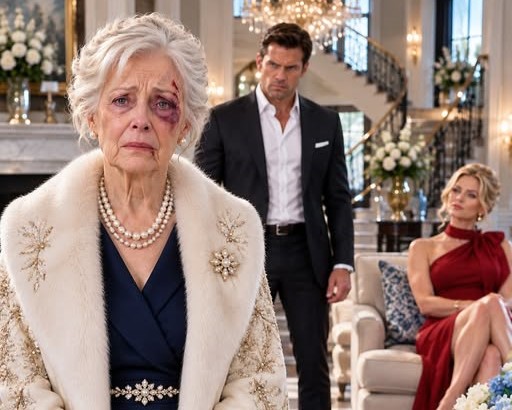
The phone continued to ring until the sound seemed to fill the quiet room around me.
I watched Trevor’s name pulse across the screen, bright and insistent, as though the letters themselves carried his authority.
For thirty years, I had answered that call no matter the hour.
I had answered when he was frightened, when he was angry, when he needed money, and when he wanted reassurance that the world would continue arranging itself around him.
This time, I let it ring.
When the call ended, another began almost immediately.
Then another.
On the fourth attempt, I pressed the green button.
“Mother, what have you done?”
His voice came through sharp and breathless.
I could hear movement behind him, a door opening, Kristen speaking in a low, urgent tone.
I sat at my kitchen table with both hands wrapped around a cup of coffee I had forgotten to drink.
“I’m not sure what you mean,” I said.
“Don’t do that.”
“Do what?”
“Pretend you don’t know.”
There was a pause.
In the background, Kristen said something I couldn’t make out.
Trevor covered the phone, but not quickly enough.
“She sold it,” Kristen whispered.
The words were followed by a silence so complete that I could almost feel the space between them.
Trevor returned to the call.
“You sold the house.”
“I sold a property owned by Cedarline Capital.”
“You know exactly what I’m talking about.”
“I know you live in that property.”
“You let me live there.”
“I did.”
“So how could you sell it without telling me?”
I looked toward the window above my sink.
The morning was pale and clear, the kind of Texas morning that made every roof and tree appear newly washed.
“I was not required to ask your permission.”
“You were my mother.”
“That is not the same as being the owner.”
His breathing changed.
For a moment, I heard only the faint hum of the refrigerator and the distant sound of a truck passing on the street.
Then he said, “You can’t do this to us.”
“I already did.”
Kristen came onto the line.
Her voice was controlled, but beneath it I heard something unfamiliar.
Fear.
“Gloria, this is not a reasonable way to handle a family disagreement.”
“A family disagreement does not usually end with someone striking another person thirty times.”
The line went still.
I had not intended to say it so plainly.
Perhaps I had been waiting for one of them to name what happened.
Neither did.
Finally, Kristen said, “Trevor was upset.”
“Upset does not explain everything.”
“You provoked him.”
I closed my eyes.
There it was.
Not regret.
Not concern.
An explanation carefully shaped to make me responsible for the damage done to me.
“Where is Trevor?” I asked.
“He’s here.”
“Then put him back on the phone.”
She did not answer immediately.
When Trevor spoke again, his voice had lowered.
“Mother, I’m sorry.”
The apology arrived without weight.
It sounded like a key being turned in a lock, something used to open the next conversation rather than to repair the last one.
“Are you?” I asked.
“Yes.”
“For what?”
He exhaled impatiently.
“For losing my temper.”
“That is not what happened.”
“What do you want me to say?”
“The truth.”
“I said I’m sorry.”
“You said you lost your temper.”
“Because you kept treating me like a child.”
I looked down at my hands.
The skin was thin across my knuckles, marked by age, work, and the small scars of a life spent handling documents, tools, and hard decisions.
“I came to your house with a birthday gift,” I said.
“Our house,” he replied.
“No, Trevor.”
The word seemed to strike him more deeply than I expected.
His tone hardened.
“You always do this.”
“Do what?”
“You give, and then you make sure everyone knows you gave.”
“I never told anyone the house was mine.”
“You didn’t have to.”
“Why not?”
“Because you expected us to live there forever.”
I stared at the untouched coffee.
“I expected you to live there responsibly.”
“We built a life there.”
“You built a life in a property you never purchased.”
“You promised it would be ours.”
I sat upright.
“No, I did not.”
“That isn’t how I remember it.”
“Then your memory is protecting you from the truth.”
For several seconds, neither of us spoke.
Then Trevor said, “A process server is outside.”
I had known that would happen.
The buyer’s representative, Daniel Cho, had arranged for the notice to be delivered in person.
He had told me that a professional service would be better than an impersonal letter, especially because the property was occupied.
I had agreed.
“His name is Daniel Cho,” I said.
“How do you know that?”
“Because he represents the buyer.”
“The buyer?”
“Yes.”
“You mean this has already been sold?”
“The closing documents were signed at eleven forty-nine.”
“It’s not even noon.”
“Correct.”
“You planned this.”
“I made a decision.”
“You planned to take my home away.”
“I decided that you would no longer live in a property you treated as a possession while denying its owner basic respect.”
Trevor gave a short laugh, but there was no humor in it.
“You really think this is going to make me respect you?”
“No.”
That answer silenced him.
“I no longer expect respect to come from fear of losing something,” I continued.
“Then what do you expect?”
“I expect you to understand that actions have consequences.”
Kristen’s voice rose behind him.
“Tell her we are not leaving.”
I heard her clearly this time.
Trevor said, “We’re not leaving.”
I took a slow breath.
“You have thirty days.”
“Thirty days?”
“The notice explains the terms.”
“You can’t just put us out.”
“The lease allows the owner to terminate your occupancy upon sale.”
“You never gave us a lease.”
“You signed one.”
“I didn’t read it.”
“That does not make it invalid.”
His silence was answer enough.
I had placed the documents in front of him five years earlier.
He had signed them without looking up from his phone, laughing that his mother trusted paperwork more than people.
At the time, I had smiled.
I had told myself he was busy.
I had told myself trust could be built later.
Now I understood that I had confused patience with progress.
A knock sounded faintly through the phone.
Daniel had reached the front door.
“Mother,” Trevor said, and for the first time that morning his voice held something close to panic.
“I need more time.”
“You have thirty days.”
“We have furniture, business equipment, everything here.”
“You will have access to the property during the notice period.”
“Where are we supposed to go?”
“That is no longer my decision.”
“You can’t abandon your own son.”
The word landed heavily.
Not because it was true, but because it had once been enough to move me.
I remembered Trevor at six years old, standing beside his father’s hospital bed with a plastic dinosaur clutched in one hand.
I remembered him at sixteen, calling me from a roadside ditch after taking his father’s truck without permission.
I remembered the college tuition, the first failed business, the gambling debts he swore were temporary, and the many times I had stepped between him and consequences because I believed a mother’s protection could become a son’s foundation.
Perhaps I had been wrong.
“I am not abandoning you,” I said.
“You’re selling my home.”
“I am ending your access to a home you never owned.”
“Same thing.”
“No, Trevor.”
The knock came again.
This time, I heard Daniel’s voice through the phone.
“Mr. Sutter, I need to deliver these documents to you personally.”
Trevor covered the receiver.
Kristen spoke rapidly.
I heard only fragments.
“Lawyer… injunction… she can’t…”
When he returned, his anger had become carefully organized.
“I’ll have my attorney contact you.”
“You should.”
“And if the sale is challenged?”
“It won’t be.”
“You sound very certain.”
“I am.”
“You think because you have money, you can do anything.”
“I think because I have documents, the law can determine what is valid.”
His breathing grew quiet.
Then he said, “You’re going to regret this.”
It was not shouted.
That made it worse.
I looked at the phone in my hand and heard, beneath his words, the same entitlement that had filled the dining room the night before.
“I already regret something,” I said.
“What?”
“That I kept mistaking rescue for love.”
I ended the call.
For several minutes, I remained at the table.
The silence after Trevor’s voice felt strange, almost physical.
I had expected relief.
Instead, I felt an ache that moved through me slowly, like a bruise revealing itself after the danger had passed.
At one o’clock, Miriam arrived.
She had been my attorney for nineteen years, long enough to know when I was making a business decision and when I was trying to disguise an emotional one as business.
Miriam was sixty-two, compact and silver-haired, with a habit of removing her glasses whenever she wanted someone to understand that the next sentence mattered.
She placed a folder on my table and sat across from me.
“Daniel delivered the notice,” she said.
“Did Trevor accept it?”
“He signed for receipt.”
“Kristen?”
“She refused.”
“That sounds like her.”
Miriam opened the folder.
“The sale is valid.”
“I know.”
“The title search was clean, the corporate resolution was properly executed, and the buyer was informed in writing that the property was occupied.”
“Who is the buyer?”
“Cedarline Holdings and Development.”
I frowned.
“That sounds familiar.”
“It should.”
She turned a page toward me.
“Cedarline Capital sold the property to Cedarline Holdings, a separate entity controlled by the same investment group.”
I read the name twice.
“Why would they use two companies?”
“Asset segregation.”
“Daniel said the buyer wanted a private transaction.”
“They did.”
I leaned back.
“Does that create a problem?”
“No.”
“Then why do I feel as though I have missed something?”
“Because you are exhausted, and because your son has spent years making you doubt the simplest facts.”
Her words struck close enough that I looked away.
Miriam closed the folder.
“Gloria, the legal side is straightforward.”
“And the personal side?”
“That is not my department.”
“You have known me too long to say that.”
She removed her glasses.
“The personal side is that you gave Trevor repeated opportunities to become responsible, and he interpreted each opportunity as proof that responsibility was optional.”
I stared at the locket lying on the counter.
It had been returned to me after Trevor tossed it onto the floor.
The silver surface was scratched near the hinge, but the clasp still held.
“I thought if I protected him long enough, he would eventually understand what I was protecting him from.”
Miriam’s expression softened.
“Sometimes people understand only after protection is removed.”
“I don’t want him ruined.”
“Then do not confuse consequences with ruin.”
Before I could answer, her gaze moved to the locket.
“That belonged to your mother-in-law, didn’t it?”
“Trevor’s grandmother.”
“You said it was empty when you found it.”
“It appeared empty.”
“Appeared?”
I picked it up.
The metal felt cool against my palm.
“I had it restored last month.”
“Why did you give it to him?”
“Because she gave it to me.”
Miriam waited.
I had not told her the entire story.
Perhaps I had not told anyone.
After Trevor’s grandmother, Evelyn, died, I found the locket in a small box among the things she had left behind.
Inside was a tiny photograph, so faded that I could barely identify the faces.
There had also been a folded scrap of paper sealed beneath the inner plate.
I had taken the locket to a jeweler, asking him to repair the hinge without opening the hidden compartment.
He had called me three weeks later.
“There is something inside,” he said.
The photograph was of Trevor as a child, sitting on his grandmother’s porch with one knee scraped and his hair falling over his eyes.
Evelyn stood behind him, one hand resting lightly on his shoulder.
The note was written in her narrow, slanted handwriting.
I had read it once and placed it in my desk.
I had been afraid that giving it to Trevor would make him feel judged.
Now I wondered whether withholding it had been another form of protection.
Miriam held out her hand.
“May I?”
I passed her the locket.
She examined the seam, then looked at me.
“Did you read what was inside?”
“Yes.”
“And?”
I went to the desk in the adjoining room and retrieved the envelope.
The paper had yellowed at the edges.
When I returned, Miriam opened it carefully.
I watched her eyes move across the page.
“What did she say?” Miriam asked.
I unfolded the note.
“‘Gloria, if you are reading this, then I am no longer here to say what I should have said while I was alive.’”
My voice faltered.
I continued.
“‘Trevor is not a bad boy, but he is being taught that love means receiving without gratitude and being forgiven without change.’”
Miriam lowered the page.
I kept reading.
“‘His father believes the world will soften for him if we keep removing every obstacle.’”
Miriam’s face changed.
I had never told her that line.
“‘You may be the only person who can teach him otherwise, but please do not mistake suffering for teaching.’”
The room seemed to contract around us.
“She knew,” Miriam said.
“She saw it before I did.”
“What else?”
I looked down at the note.
“‘There are things his father has hidden from you to preserve peace in this family.’”
Miriam straightened.
“What things?”
“I don’t know.”
“You never asked?”
“Evelyn died two days after writing it.”
“Did your husband know about the note?”
“No.”
“Are you certain?”
“I found it after the funeral.”
Miriam glanced toward the folder on the table.
“Your husband had business accounts connected to Cedarline before his death.”
“I know.”
“Did he ever mention withdrawals?”
The question was so precise that I looked at her.
“What withdrawals?”
Miriam did not answer immediately.
Instead, she opened the folder again and removed several photocopied pages.
“These came from the old Cedarline files.”
I recognized the format at once.
Bank transfer records.
Internal authorization forms.
Ledger entries.
The dates were from seven years earlier, when Trevor was twenty-three.
Miriam placed the first document in front of me.
A transfer of forty thousand dollars from Cedarline Capital to an account bearing Trevor’s initials.
I read the amount twice.
“Why have I never seen this?”
“Because the original file was separated from the active records.”
“By whom?”
“We are still checking.”
She placed another page beside it.
Then another.
There were six transfers in all.
The total was one hundred and eighty-six thousand dollars.
My throat tightened.
“What was this money for?”
Miriam tapped the final page.
“According to the bank’s notes, the withdrawals were connected to a gambling debt.”
The kitchen seemed to tilt.
I sat down.
Trevor had always told me his first business had failed because of a bad partner.
He had said the partner disappeared with the accounts.
I had believed him.
I had covered the loss through Cedarline reserves, telling myself that a young man deserved one chance to recover from a mistake.
But I had never known the loss was this large.
I had never known the money had gone to gambling.
Miriam’s voice was quiet.
“You authorized a reimbursement for the amount, didn’t you?”
“I thought I was covering a business shortfall.”
“You signed a transfer from your personal account.”
“I remember the transfer.”
“Do you remember who asked you to make it?”
I pressed my fingers against my temple.
“My husband.”
Miriam watched me carefully.
“What did he tell you?”
“That Trevor had made a mistake.”
“Did he say what kind?”
“No.”
“Why would he hide it?”
I looked at the locket.
Because he believed the family could be held together by keeping the truth away from the people who needed it.
Because I had allowed him to believe that.
Because we had both loved Trevor in ways that required less of him than honesty would have required.
A soft chime came from my phone.
A message had arrived from an unknown number.
I opened it.
The text contained only one sentence.
You were never supposed to find the Cedarline withdrawals.
I showed it to Miriam.
For the first time since she entered my home, she looked genuinely alarmed.
“Did Trevor send this?” I asked.
“I don’t know.”
“Could it be Kristen?”
“Possibly.”
“Who else knew?”
Miriam reached for her phone.
“Do not respond.”
“I wasn’t going to.”
But beneath the message, another one appeared.
This time, there was an attachment.
A photograph of an old Cedarline document lay on a desk somewhere, its edges blurred but its signature visible.
My husband’s signature.
And beneath it, in a line I had never seen before, were the words:
Trust amendment: beneficiary rights suspended pending proof of responsibility.
Miriam stared at the image.
I felt the blood drain from my face.
“Gloria,” she said slowly, “did you know your husband created a trust for Trevor?”
Part 3 – The Signature in the Drawer
Miriam’s question remained between us like a door neither of us wanted to open.
“Did you know your husband created a trust for Trevor?”
I looked again at the photograph on her phone.
The document was old, but the signature beneath the amendment was unmistakable.
My husband’s name had always leaned slightly upward at the end, as though even his handwriting expected a favorable outcome.
“No,” I said.
The word came out quietly.
Miriam studied my face.
“Are you certain?”
“I knew he had investments.”
“You knew about Cedarline.”
“I knew he created the company.”
“But not a trust?”
“Not one for Trevor.”
She lowered the phone.
“Then someone has been keeping information from you.”
I almost laughed, but there was no humor in me.
“Everyone seems to know more about my family than I do.”
“That may not be true.”
“It feels true.”
Miriam placed the phone beside the papers.
“The image came from an unknown number.”
“Can you trace it?”
“Not immediately, but I can have our technical consultant examine the metadata.”
“Do that.”
“I will.”
I looked at the transfer records again.
Six payments.
One hundred and eighty-six thousand dollars.
The amount was large enough to change a company’s plans, but not large enough to threaten Cedarline at the time.
That must have been why I had not noticed the damage.
I had been looking at the entire structure.
Someone else had been quietly removing bricks.
“Why would Trevor send this?” I asked.
“I’m not sure he did.”
“He knew about the money.”
“You said he told you the business had failed because of a partner.”
“He may have known the full story.”
Miriam’s expression became more guarded.
“Then we need to determine what he knew, when he knew it, and whether anyone else helped conceal it.”
The phone rang before I could answer.
Trevor’s name appeared on the screen again.
This time, I did not feel anger.
I felt tired.
Miriam gestured toward the phone.
“You do not have to answer.”
“If I don’t, he will call again.”
“Then let him.”
I pressed the button.
“Mother.”
His voice was strained.
“Where are you?”
“At home.”
“Is Miriam with you?”
“Yes.”
He was quiet for a moment.
“Did she show you something?”
“What do you mean?”
“Documents.”
“Which documents?”
“The old Cedarline records.”
I looked at Miriam.
Her eyes narrowed.
“How do you know she has them?” I asked.
“Because I sent them.”
The room seemed to shift.
“Did you send the photograph?”
“Yes.”
“Why?”
“Because I needed you to know.”
“Know what?”
“That Dad changed the trust.”
Miriam leaned forward and mouthed, Ask him about the withdrawals.
I kept my voice steady.
“Did you know about the transfers from Cedarline?”
Another pause.
“Yes.”
“How long?”
“Since I was twenty-three.”
“You knew the money came from Cedarline?”
“I knew Dad arranged it.”
“You told me the business failed because of a partner.”
“I was ashamed.”
“You were not ashamed enough to let me believe you.”
“I was twenty-three.”
“You were old enough to gamble away one hundred and eighty-six thousand dollars.”
His breathing became uneven.
“I didn’t gamble it all at once.”
“That is not a defense.”
“I’m not defending it.”
“Then tell me the truth.”
For several seconds, he said nothing.
Behind him, I heard a door close.
“Kristen isn’t here,” he said.
“I did not ask.”
“She went to see an attorney.”
“About the sale?”
“About everything.”
The last word carried a meaning I could not yet grasp.
“What does that mean?”
“Nothing.”
“Trevor.”
“I’m trying to fix this.”
“You should have started before you hit me.”
“I said I was sorry.”
“You said you lost your temper.”
His voice dropped.
“I know.”
The admission was so soft that it unsettled me more than an argument would have.
I looked away from Miriam.
“Why send me the trust document?”
“Because you deserved to know Dad had intended the property for me.”
Miriam’s gaze sharpened.
“Intended,” I repeated.
“He created Cedarline for me.”
“That is not what the document says.”
“You haven’t seen the whole document.”
“I have seen enough to know your rights were conditional.”
“Conditional on something Dad never explained.”
“Perhaps he explained it to me.”
“Did he?”
I thought of my husband during the last months of his illness.
He had been tired, irritable, and increasingly private about his business.
Whenever I asked whether there was anything I needed to handle, he told me Cedarline was organized and that I should focus on Trevor.
I had believed he was protecting me from unnecessary details.
Perhaps he had been protecting a different secret.
“No,” I said.
Trevor gave a bitter laugh.
“Then we are both finding things out late.”
“Who sent you the document?”
“What?”
“The photograph came from an unknown number.”
“I sent it.”
“From your phone?”
“I used a temporary number.”
“Why?”
“Because Kristen checks my messages.”
Miriam wrote something on a notepad.
I felt a chill that had nothing to do with the air-conditioning.
“Why would Kristen check your messages?”
“Because she thinks I’m hiding money.”
“Are you?”
“No.”
“Are you hiding anything else?”
He did not answer.
“Trevor.”
“I knew about the trust.”
The words were spoken so quietly that I almost missed them.
“Since when?”
“Since before I married Kristen.”
“You knew Dad had placed the mansion in trust for you?”
“I knew he had set something up.”
“And you allowed me to believe you thought I had given you the property.”
“I thought it would eventually become mine.”
“That is not the same answer.”
“Dad told me the trust would transfer when I was ready.”
“Ready for what?”
“I don’t know.”
“You never asked?”
“I was a kid.”
“You were twenty-three.”
“I was grieving.”
“So was I.”
His silence held the first honest recognition I had heard from him all morning.
Then he said, “Dad made me promise to finish counseling.”
I looked at Miriam.
She stopped writing.
“What counseling?”
“I had nightmares after the accident.”
“What accident?”
“You know about it.”
“I know you were in a car accident when you were eleven.”
“That’s not all.”
His voice changed.
It became younger.
“I was driving with Dad when the truck hit us.”
I remembered the accident.
I remembered the hospital.
I remembered Trevor’s broken arm and my husband’s bruised ribs.
I had not known Trevor had been awake when the truck crossed the center line.
He had never spoken about it afterward.
“Dad said I needed help,” Trevor continued.
“I thought he meant grief counseling.”
“He said I needed to learn how to live with what happened.”
My fingers tightened around the edge of the table.
“What happened?”
“He had been drinking.”
Miriam looked at me sharply.
I could barely breathe.
“He told me he was tired and that I should never tell you.”
“Your father was not drinking.”
“That’s what he said.”
“Your father told me the other driver caused the accident.”
“Maybe he lied to both of us.”
I closed my eyes.
Memories surfaced in fragments.
My husband returning home late the night before.
His insistence on driving Trevor to a school event.
The phone call from the hospital.
His hand around mine as he told me there had been no reason to worry.
I had believed him because I had needed to.
“What does this have to do with the trust?” I asked.
“Dad said I would receive it when I completed treatment and proved I could manage money.”
“Did you complete treatment?”
“No.”
“Why not?”
“Because you stopped taking me.”
The accusation was immediate.
I felt it before I understood it.
“You refused to go.”
“After you told me Dad didn’t want to talk about the accident.”
“I never said that.”
“You said he was sick.”
“He was sick.”
“He was dying, and you kept telling me not to upset him.”
I pressed my hand against my chest.
There had been so much fear in that house during those months.
Fear of losing my husband.
Fear of what would happen to Trevor.
Fear that any honest conversation might break whatever fragile peace remained.
“I thought I was protecting you,” I said.
“You always think that.”
His words were not loud.
They were worse because they sounded rehearsed.
“Did Kristen know about the trust?” I asked.
He did not respond.
“Trevor.”
“Yes.”
“How?”
“She knew someone who worked with Dad.”
“Who?”
“I don’t know.”
“You married her knowing she expected access to money you did not yet control.”
“That wasn’t why she married me.”
“Are you certain?”
He exhaled.
“I don’t know anymore.”
The answer carried a sadness I had not expected.
Before I could ask another question, he said, “I need you to stop the sale.”
“No.”
“Please.”
“You have thirty days.”
“I need the house.”
“You need a place to live.”
“I need time to figure out what Dad intended.”
“You have had seven years to do that.”
“I was told the trust would be activated when you approved it.”
I stared at the phone.
“What?”
“Dad said you were the trustee.”
Miriam rose and walked toward the desk where I kept the old Cedarline files.
“Why didn’t you ask me?” I said.
“Because you made it clear I had failed.”
“I never told you there was a trust.”
“You told me I had to earn anything I received.”
“That is different.”
“Not to me.”
I heard a door open on his end.
“Who is there?” I asked.
“Daniel Cho.”
“The buyer’s representative?”
“Yes.”
“Why is he with you?”
“He came to inspect the property.”
“The inspection was scheduled for tomorrow.”
“I know.”
“What happened?”
“Some of the walls are damaged.”
“From what?”
“Renovations.”
I closed my eyes.
Trevor had been renovating the mansion for two years.
He had told me he was improving the kitchen and converting a storage wing into an office.
I had not questioned him because I had not wanted to appear controlling.
“What kind of damage?” I asked.
“Load-bearing damage,” Daniel said in the background.
His voice was calm but serious.
Trevor came back onto the line.
“Daniel says the buyer may withdraw.”
“Why?”
“Because part of the second floor was altered without permits.”
I remembered the photographs Trevor had sent me last Christmas.
A bright new office.
Wood flooring.
A wall removed to create an open room.
He had called it an investment.
I had said it looked beautiful.
“Did you hire an engineer?” I asked.
“I hired a contractor.”
“That was not my question.”
“The contractor said it was fine.”
“Does he have a license?”
“I don’t know.”
Miriam returned with a gray archive box in her hands.
Her expression was unreadable.
“Trevor,” I said, “you may have damaged the property.”
“I was improving it.”
“You were altering a structure you did not own.”
“I thought I would own it.”
“That does not excuse the work.”
“I know.”
Again, the quiet admission.
Daniel spoke in the background.
“Mr. Sutter, I need access to the west wing.”
“Give him access,” I said.
Trevor’s voice tightened.
“Mother, please don’t make this worse.”
“I am not the person who removed a load-bearing wall.”
“We can repair it.”
“Who is going to pay?”
He said nothing.
I looked at the archive box.
“Miriam, I need to call you back.”
“Do not speak to Kristen alone,” she said.
“Why?”
“Because I found something.”
She placed the box on the table.
Across the lid, in my husband’s handwriting, were two words:
For Gloria.
I ended the call.
“What did you find?” I asked.
Miriam opened the box.
Inside were bank statements, corporate resolutions, handwritten notes, and a thin leather folder.
She removed the folder first.
A photocopy of a document lay inside.
At the top were the words Beneficial Interest and Occupancy Agreement.
I recognized Trevor’s signature at the bottom.
So did Miriam.
“He signed this,” I said.
“Yes.”
“What is it?”
“An acknowledgment that he and Kristen occupied the mansion under a revocable license, not ownership.”
“That sounds like the lease.”
“It is more than the lease.”
She turned the page.
“There is a clause stating that any attempt to represent the property as personally owned would constitute a material breach.”
I thought of the forged gift agreement.
The document Kristen had supposedly created using my signature.
“Was this recorded?”
“No.”
“Does it still matter?”
“It matters as evidence of what Trevor understood.”
I read the paragraph again.
The letters blurred.
“He knew.”
“He knew he did not own the property.”
“He knew,” I repeated.
Miriam reached deeper into the box.
“There is more.”
She pulled out a second folder.
This one contained copies of emails.
The first was from Kristen to someone named Arthur Bell.
I recognized the name.
Arthur had been a longtime friend of my husband’s.
The email was dated three years earlier.
If Gloria refuses to release the trust, Trevor will never be able to claim the house.
The next message was from Arthur.
She may not know the trust exists.
Kristen had replied:
Then we need to find the instrument before she does.
My mouth went dry.
Miriam scrolled through the printed pages.
There were several more exchanges.
Kristen had asked Arthur about the conditions.
Arthur had refused to discuss details by email.
But one line appeared twice.
The beneficiary must demonstrate financial responsibility and complete treatment.
I looked at Miriam.
“She knew.”
“Yes.”
“She knew about the trust before she married him.”
“It appears so.”
I felt a deep, unfamiliar sorrow settle over me.
Not surprise.
Not even anger.
Sorrow for the part of Trevor’s life that had been turned into a negotiation before he understood he was being negotiated over.
“Why would she marry him if she knew he might never receive it?”
“Because she believed she could influence the outcome.”
Miriam placed the emails beside the transfer records.
“There is something else.”
A bank statement showed a transfer from an account in Kristen’s name to a private investigator.
The amount was twelve thousand dollars.
The date was six months before Trevor’s wedding.
“What was she investigating?” I asked.
Miriam turned the page.
“Your signature.”
I stared at the line.
The investigator’s invoice described a search for archived documents bearing my handwriting.
There was also a note from the investigator.
Client requests samples suitable for reproduction on a private agreement.
The room seemed to lose all sound.
“The forged gift agreement,” I whispered.
Miriam nodded.
“Kristen did not create it after the argument.”
“She planned it before the marriage.”
“Possibly.”
I read the invoice again.
The paper trembled in my hand.
Trevor had said Kristen pressured him to obtain ownership.
He had said he did not know how far she would go.
But if she had been collecting samples of my signature before they married, then the plan was older than either of them had admitted.
My phone began to ring.
Kristen.
I watched her name appear.
Miriam said nothing.
Neither did I.
The ringing stopped.
A message appeared almost immediately.
Gloria, we need to talk before Trevor tells you the whole story.
A second message followed.
The trust is not what you think it is.
Then a third.
Your husband did not leave Trevor the mansion.
I looked at Miriam.
“What does that mean?” I asked.
Before she could answer, the phone chimed again.
This message contained a photograph.
It showed the final page of the trust agreement.
At the bottom was my husband’s signature.
Beside it was mine.
I had no memory of signing the document.
But the signature looked exactly like my own.
Miriam leaned over the screen.
Her face went pale.
“Gloria,” she said, “that signature was not copied from the gift agreement.”
“Then where did it come from?”
She enlarged the photograph.
Beneath the signatures was a sentence I had never seen.
Upon the trustee’s death or incapacity, control shall pass to the successor trustee named herein.
Miriam read the name.
Then she looked at me.
“The successor trustee is Kristen Sutter.”
Part 4 – The Condition He Never Knew
“The successor trustee is Kristen Sutter.”
Miriam’s words did not seem to belong in my kitchen.
They hovered above the documents, absurd and weightless, while every ordinary detail around us remained exactly where it had been.
The refrigerator hummed.
A clock ticked near the hallway.
Outside, a lawn service truck moved slowly along the street, its engine fading into the distance.
I kept staring at the photograph on my phone.
My signature appeared beneath my husband’s.
It looked genuine.
That was the most frightening part.
“Kristen cannot be the successor trustee,” I said.
Miriam did not answer immediately.
She enlarged the image again, studying the line beneath the signatures.
“It says Kristen Sutter.”
“That does not make it valid.”
“No.”
“Then why are we looking at it as though it is?”
“Because someone wants us to believe it is.”
I turned toward the archive box.
“My signature was never on a trust agreement.”
“Not that you remember.”
“I would remember signing something that controlled Trevor’s inheritance.”
“People remember what they understand.”
Her words struck me with uncomfortable force.
In the final year of my husband’s life, I had signed stacks of papers.
Medical forms.
Insurance documents.
Corporate resolutions.
Tax filings.
He had placed folders in front of me and explained only what he thought I needed to know.
Sometimes I signed while sitting beside his hospital bed.
Sometimes I signed in the car outside an appointment.
Sometimes I signed because he looked exhausted and told me we could discuss the details later.
There were moments when love made ignorance feel like kindness.
I took the phone from Miriam.
“Can you tell whether this image has been altered?”
“Not yet.”
“Then we need the original.”
“Agreed.”
“Where is it?”
“That is what we have to determine.”
The phone rang again.
This time, it was Kristen.
I let it continue until Miriam reached across the table and silenced the call.
“She wants to control the conversation,” Miriam said.
“She knows we found the document.”
“Or she knows Trevor has told you more than he intended.”
“I need to speak with her.”
“Not alone.”
“I do not want another argument.”
“Then speak with her here, with me present.”
The phone began ringing again.
Miriam looked at me.
I answered.
“Kristen.”
“Gloria, thank goodness.”
Her voice sounded relieved, but the relief felt rehearsed.
“I have been trying to reach you.”
“I saw.”
“Trevor told me what he shared.”
“What did he share?”
“That Arthur Bell helped your husband establish a trust.”
“He did.”
“And that the trust was altered after your husband became ill.”
“Was it?”
“I believe so.”
“You sent me a photograph of a page bearing my signature.”
“I wanted you to know what was in it.”
“You wanted me to believe that you were the successor trustee.”
“I did not create the document.”
“Then who did?”
She hesitated.
“I don’t know.”
“Why did you pay an investigator to collect samples of my signature?”
The silence that followed was not the silence of surprise.
It was the silence of someone deciding which truth could survive the next sentence.
“Where did you find that?” she asked.
“In the Cedarline files.”
“Gloria, I can explain.”
“Please do.”
“Trevor and I were trying to understand what your husband had arranged.”
“Before you married him?”
“We were already discussing our future.”
“Your future included my signature?”
“Our future included making sure Trevor received what had been intended for him.”
“You were not entitled to anything.”
“I never said I was.”
“You searched for ways to reproduce my name.”
“I searched for documents.”
“The invoice does not say that.”
“Private investigators use careless language.”
“Did you ask someone to forge my signature?”
“No.”
Her answer came too quickly.
Miriam wrote something on a pad and turned it toward me.
Ask whether she knew the conditions.
“Did you know the trust required Trevor to complete treatment and demonstrate financial responsibility?”
Kristen’s breathing changed.
“I knew there were conditions.”
“What kind?”
“I was told they were flexible.”
“Who told you?”
“Arthur.”
“Did he tell you the conditions before you married Trevor?”
“Yes.”
I closed my eyes.
The pain did not come as a sudden blow.
It spread gradually, like cold moving through water.
“Did you marry my son because you believed you could gain access to the trust?”
“No.”
“Then why did you need my signature?”
“Because you were preventing Trevor from receiving what belonged to him.”
“That is not an answer.”
“You controlled the company.”
“I was the trustee.”
“You controlled everything.”
“And you thought a forged agreement would change that?”
“I did not forge anything.”
“Your name is on the invoice.”
“I hired someone to find documents, not copy your signature.”
“Then who created the gift agreement?”
She did not answer.
“Kristen.”
“I don’t know.”
“You have been lying to me.”
“So have you.”
The accusation was soft, almost weary.
I looked at Miriam.
“About what?”
“About Trevor.”
“What do you mean?”
“You knew he was not ready for the trust.”
“I knew he was irresponsible.”
“You knew more than that.”
A pressure began to build behind my eyes.
“I did not know about the trust.”
“You knew he was in treatment.”
“I knew he attended counseling after the accident.”
“You stopped it.”
“He stopped going.”
“Because you told him his father was too sick to discuss what happened.”
I gripped the phone.
“That is not the same thing.”
“It was to him.”
“Did you marry him knowing he had abandoned treatment?”
“I married Trevor because I loved him.”
“Do you still?”
The question seemed to unsettle her.
When she finally spoke, her voice was quieter.
“I do not know what love means after people have used it to excuse everything.”
For the first time, I heard something human in her voice that was not calculation.
It did not absolve her.
But it reminded me that people could become lost inside the choices they defended.
“Where is the original trust agreement?” I asked.
“I don’t know.”
“Arthur has a copy.”
“Arthur may have had one.”
“Why did he tell you about it?”
“Because he believed Trevor deserved to know.”
“Did he tell you that the mansion was only one part of the trust?”
Kristen went silent.
Miriam looked up sharply.
“What else was there?” I asked.
“Investments.”
“How many?”
“I don’t know.”
“Kristen.”
“Several accounts.”
“And the property?”
“Your husband placed it into Cedarline.”
“For Trevor?”
“For his future.”
“Not his immediate possession.”
“No.”
“Why did you allow him to believe otherwise?”
“Because he believed it anyway.”
I felt a sadness deeper than anger.
“You could have corrected him.”
“So could you.”
The words landed because they contained a piece of truth.
I had known Trevor was assuming too much.
I had watched him call the mansion his home, speak of renovations, and make plans for a future built on an inheritance he had never earned.
I had stayed silent because I thought time would teach him.
Time had taught him only that silence could be interpreted as permission.
“Did you create the forged gift agreement?” I asked.
“No.”
“Did you know it existed?”
Another pause.
“Yes.”
“When did you find out?”
“Three months ago.”
“Why did you say nothing?”
“Because Trevor told me he had a right to the property.”
“You knew the document was false.”
“I knew it was not complete.”
“That is not what I asked.”
“I knew it was not legally sufficient.”
“Who prepared it?”
“I don’t know.”
“Was Arthur involved?”
“I don’t know.”
“Was Trevor?”
Her silence answered before her words did.
“Trevor knew I was looking for a way to make the trust effective,” she said.
“Did he know about the forged signature?”
“I do not know.”
“Ask him.”
“He will say he did not.”
“Would he be lying?”
“I don’t know anymore.”
That sentence seemed to empty the room.
Kristen had built her life around certainty.
Now even she appeared unable to distinguish between what she had believed and what she had chosen to believe.
“I want the original trust agreement,” I said.
“I can help you find it.”
“Why?”
“Because if the successor trustee clause is real, then you have been treating me as an enemy when I may be the only person who can explain what happened.”
“You are not the trustee.”
“Perhaps not.”
“Then what are you?”
“I may be the person your husband appointed to protect Trevor if you could not.”
I looked at the photograph again.
The signature beneath my husband’s was mine.
Or a convincing imitation of mine.
“What did my husband think I would be unable to do?” I asked.
Kristen did not answer.
Miriam reached for the phone.
“Tell her where you are,” she said.
I repeated the question.
Kristen breathed out slowly.
“His office.”
“My husband’s old office?”
“Yes.”
“Why?”
“Arthur kept a locked cabinet there.”
“Do you have access?”
“I found a key.”
“Where is the cabinet?”
“In the wall behind the bookcase.”
Miriam’s expression sharpened.
That office had been closed since my husband’s death.
I had never searched it.
I had not been able to enter without remembering him at his desk, sleeves rolled up, papers arranged in careful lines, his glasses resting at the end of his nose.
“Are you alone?” I asked.
“Yes.”
“Stay there.”
“Are you coming?”
“Yes.”
Miriam shook her head.
I covered the phone.
“What?”
“You should not go without arranging witnesses.”
“Then come with me.”
“I will.”
I returned to the call.
“Kristen, do not touch anything.”
“I already opened the cabinet.”
“Then step away from it.”
“I found a box.”
“What kind of box?”
“Wooden.”
“Is there a name on it?”
“Gloria.”
My breath stopped.
Miriam took the phone from my hand.
“Kristen, this is Miriam Hale.”
“I know who you are.”
“Describe the box.”
“It is dark wood, about twelve inches wide.”
“Is it locked?”
“No.”
“Do not open it.”
“I already did.”
Miriam’s face tightened.
“What is inside?”
“Letters.”
“How many?”
“Several.”
“Anything else?”
“A sealed envelope.”
“What does it say?”
Kristen did not answer.
“Kristen,” Miriam said.
“It says, ‘For Gloria, when the truth can no longer be postponed.’”
I felt the words move through me.
My husband had known.
He had known that one day the truth would become unavoidable.
“Read me the first letter,” I said.
There was a rustle.
Then Kristen began.
“‘Gloria, if you are holding this, I have failed to explain what I should have explained while I was still strong enough to endure your anger.’”
I closed my eyes.
His voice returned to me, not through the phone but from memory.
The low warmth of it.
The slight hesitation before difficult admissions.
The way he would touch the bridge of his nose whenever he feared disappointing me.
Kristen continued.
“‘I created Cedarline for Trevor, but I did not create it as a reward.’”
Miriam’s hand found mine.
“‘I created it as a structure strong enough to survive the weaknesses he inherited from me and learned from us.’”
The words entered me like a confession from a room I had believed empty.
“Keep reading,” I said.
“‘Trevor has been frightened since the accident, though he hides fear behind anger and appetite.’”
Kristen’s voice faltered.
“‘I taught him that mistakes could be erased if money was available. You taught him that love could absorb whatever money could not.’”
I opened my eyes.
Miriam looked at me, but I could not meet her gaze.
“‘Neither of us intended to make him helpless.’”
Kristen stopped.
“What is it?” I asked.
“There is something written on the back.”
“Read it.”
“‘The trust must remain under Gloria’s control unless she becomes unable to act in Trevor’s best interest.’”
I turned toward the window.
The sky had changed.
Clouds had gathered over the neighborhood, darkening the bright morning.
“Continue,” I said.
“‘If Gloria cannot serve, Kristen may act as successor trustee only with the written approval of Miriam Hale and Arthur Bell.’”
Miriam’s head lifted.
“There it is,” she said.
“What?”
“The missing condition.”
Kristen continued.
“‘No successor trustee may distribute the principal until Trevor has completed treatment, demonstrated sustained financial responsibility for no less than five years, and acknowledged the truth of the accident without blaming others for the consequences.’”
The room went quiet.
I could hear Kristen breathing on the other end.
The document had not named her as Trevor’s heir.
It had named her as a safeguard.
A person permitted to preserve the trust, not release it.
“Why did you show me the photograph without the conditions?” I asked.
Kristen did not answer.
“Why?”
“Because I thought if you believed I had control, you would negotiate with me.”
My heart sank.
“You wanted leverage.”
“I wanted Trevor to have a chance.”
“You wanted access.”
“I wanted him to stop waiting for you to change your mind.”
“You knew I had not known the terms.”
“I knew you had kept the trust from him.”
“I was the trustee.”
“You were his mother.”
“I was trying to protect him.”
“And you made yourself the gatekeeper of his entire future.”
The anger in her voice was no longer smooth.
It cracked around the edges.
“I watched him become dependent on your approval,” she said.
“I watched him become dependent on my money.”
“Because you kept rescuing him.”
“Because he kept falling.”
“Maybe he fell because he knew you would catch him.”
I wanted to reject the accusation.
Instead, I heard the truth inside it.
I had paid the debts.
I had repaired the damage.
I had protected his reputation.
I had accepted explanations that made him look immature rather than dishonest.
I had called it compassion because the alternative was admitting that I had helped him remain unchanged.
“Where is Trevor?” I asked.
“At the mansion.”
“Does he know you are in the office?”
“No.”
“Does he know about the letters?”
“No.”
“Then stay there.”
“Why?”
“Because I need to speak with him before anyone else tells him what he is supposed to feel.”
Miriam stood.
“We should go.”
I gathered the documents with hands that no longer felt entirely steady.
Before leaving, I looked once more at the locket on the counter.
The photograph inside showed Trevor as a boy, smiling at something beyond the frame.
His grandmother’s hand rested on his shoulder.
For years, I had believed the image represented a promise.
Now I understood that it was also a warning.
Love could stand behind a person without carrying him.
When Miriam and I reached the old office, the door was open.
Kristen stood beside the concealed cabinet, holding the wooden box against her chest.
Her face looked different from the woman who had watched me bleed at the birthday dinner.
Not kinder.
Not innocent.
Simply tired of holding a secret too large for the life she had built around it.
“Where are the other letters?” I asked.
She handed me the box.
“There are seven.”
“Have you read them?”
“Four.”
“Why stop?”
“The fifth one is addressed to Trevor.”
I looked down.
A cream-colored envelope rested beneath the others.
My son’s name was written across it in his father’s hand.
I lifted it carefully.
“There is also this,” Kristen said.
She reached into the cabinet and removed a narrow metal key.
“What does it open?”
“I don’t know.”
Miriam examined it.
An inscription had been stamped into the metal.
Cedarline Archive—Vault 3.
I looked at her.
“Does Cedarline have a vault?”
“Not one I know about.”
Kristen swallowed.
“Arthur told me there was a storage facility outside Austin.”
“Why didn’t you tell us?”
“Because I was afraid the records would prove Trevor had no claim.”
“The records may prove something else.”
She looked at the envelope in my hand.
“Will you tell him?”
“Yes.”
“Even if it destroys what he believes about his father?”
“The truth did not destroy his father.”
“No,” Kristen said.
“It only waited for the rest of us to become brave enough to face it.”
A car door slammed outside.
We all turned toward the window.
Trevor stood beside his car at the end of the drive.
He had seen us.
His gaze moved from me to Kristen, then to the box in my hands.
He began walking toward the office.
I held the letter addressed to him against my chest.
Miriam whispered, “Do not open it for him.”
“I won’t.”
The office door creaked wider.
Trevor stopped on the threshold.
“What is that?” he asked.
I looked at my son, at the man who had spent years believing an inheritance could replace accountability, and at the letter his father had written before any of us understood how much truth had been postponed.
“It is from your father,” I said.
His face tightened.
“What does it say?”
I glanced at the sealed envelope.
“It says the trust was never meant to give you the mansion.”
Trevor stared at me.
“Then what was it meant to give me?”
Before I could answer, Miriam turned the envelope over.
A second line, hidden beneath the fold, had become visible.
It read:
To be opened only after Trevor has admitted what happened on the night of the accident.
Part 5 – The Price of Mercy
Trevor stood in the doorway, staring at the sealed letter in my hands.
“What does it say?” he asked again.
I looked at my son and saw, beneath the anger and confusion, the frightened boy who had once sat in a hospital bed pretending not to be afraid.
“It says your father believed the truth had to come before the inheritance.”
Trevor’s mouth tightened.
“You knew about the accident.”
“I knew there had been an accident.”
“You knew he was drinking.”
“I did not know that.”
“He told me never to tell you.”
“And you obeyed him.”
“I was eleven.”
“You were also carrying something no child should have carried alone.”
His gaze dropped to the floor.
For the first time, the room seemed to hold all three of us at once: the boy Trevor had been, the man he had become, and the mother who had spent years trying to protect both versions from one another.
Kristen moved toward the desk.
“Trevor, there is more.”
He looked at her.
“What did you do?”
The question was quiet, but it carried years of suspicion.
She did not flinch.
“I found the trust documents.”
“You went through the cabinet?”
“Yes.”
“Why?”
“Because Gloria deserved the truth.”
“You could have told her without searching for leverage.”
“I know.”
His expression hardened.
“Leverage?”
“I showed her the page naming me as successor trustee.”
“You told her you controlled the trust.”
“I let her believe that.”
“Why?”
“Because I wanted her to negotiate.”
“Negotiate what?”
“The house.”
He looked from Kristen to me.
“What does that mean?”
“It means she tried to persuade me to release the property,” I said.
Trevor’s eyes narrowed.
“Did she?”
“No.”
“Then why are you still defending her?”
“I am not defending her.”
“You always defend people who use me.”
I felt the old instinct rise inside me, the urge to soften the moment before it became unbearable.
This time, I let the silence remain.
Kristen lowered her gaze.
“I knew about the trust before we married,” she said.
Trevor went still.
“What?”
“I knew your father had created one.”
“You knew?”
“I knew there was a condition attached to it.”
“What condition?”
“That you complete treatment and show financial responsibility.”
He turned toward me.
“Did you know?”
“I knew your father wanted you to continue counseling.”
“That is not what I asked.”
“No,” I said.
“I did not know about the trust.”
His face changed.
The anger did not disappear, but uncertainty entered it.
“You’re telling me you didn’t know Dad put the mansion in a trust?”
“I am telling you I did not know the full arrangement.”
“And you still kept me out of the house?”
“I did not keep you out.”
“You controlled it.”
“I managed it.”
“Same thing.”
“No,” I said.
“Management carries responsibility.”
“Responsibility for what?”
“For what happens when people believe they are entitled to something they have not earned.”
His eyes flashed.
“You made me believe I would inherit.”
“I never promised you the mansion.”
“You never corrected me.”
“That is true.”
The admission seemed to affect him more than an argument would have.
“I should have corrected you,” I continued.
“I should have told you about the trust, about the conditions, and about the money your father concealed from me.”
“But you didn’t.”
“No.”
“Why?”
“Because I believed silence could protect you.”
His laugh was small and bitter.
“It protected you.”
“It protected me from having to face how little I understood.”
He looked away.
Miriam placed the final letter on the desk.
“Trevor, there is something you must read before we discuss the trust further.”
He did not reach for it.
“What is it?”
“Your father’s account of the accident.”
Trevor’s face drained of color.
“I already know what happened.”
“Do you?”
“He was drunk.”
“That is part of it.”
“What else is there?”
Miriam glanced at me.
I nodded.
Trevor opened the envelope.
The paper inside was folded twice.
His hands shook as he unfolded it.
He read the first page without speaking.
Outside, a light rain began tapping against the office windows.
The sound grew steadier, filling the room whenever Trevor stopped breathing.
At last, he whispered, “He says he was driving too fast.”
I said nothing.
“He says he looked down at the radio.”
His eyes moved across the page.
“He says he saw the truck too late.”
Kristen stood a few feet away, her arms folded tightly across her chest.
Trevor read on.
“He says the other driver was not at fault.”
I watched the words reach him one at a time.
The story he had carried for more than twenty years had been built on an incomplete confession.
His father had not been innocent.
But neither had he been the monster Trevor had imagined.
He had made a reckless decision, then spent the rest of his life trying to bury it beneath money, silence, and arrangements meant to protect his son from the truth.
Trevor lowered the letter.
“Why did he say I had to admit what happened?”
“Because you saw him before anyone else did,” Miriam said.
Trevor stared at her.
“What does that mean?”
“Your father wrote that you woke in the hospital before your mother arrived.”
Trevor’s fingers tightened around the paper.
“He says you asked him whether he had been drinking.”
Trevor closed his eyes.
A memory seemed to pass through his face.
“I remember the hospital,” he said.
“I remember him sitting beside me.”
“What did he tell you?” I asked.
“He told me the other driver had crossed the line.”
“That was not true.”
“I know that now.”
“He asked you to keep the story.”
Trevor’s voice became thin.
“He said if I told you, you would hate him.”
I felt something inside me break open.
Not because I hated my husband.
Because I had spent years believing his silence had been an act of protection, when it had also been an act of fear.
Trevor looked at me.
“You would have left him.”
“I might have been angry.”
“You would have taken me away.”
“I would have gotten you help.”
“He said I would lose both of you.”
I reached for the back of a chair but did not sit.
“You were a child.”
“I thought I was saving our family.”
“You were never responsible for saving us.”
“I know that now.”
The words trembled between us.
For a moment, I thought the room might finally become honest enough to hold all of us.
Then Trevor placed the letter on the desk.
“Does this mean I lose everything?”
Miriam answered before I could.
“The trust does not disappear because you failed its conditions.”
“What does it mean?”
“It means the assets remain protected until the terms are satisfied or legally altered.”
“Who controls them?”
“Gloria.”
He looked at me.
“Still?”
“Yes.”
“And the mansion?”
“It has been sold.”
“You knew I was living there.”
“I did.”
“You knew I had nowhere to go.”
“You have thirty days to relocate.”
“That is not an answer.”
“No,” I said.
“It is a boundary.”
He turned away.
The rain had darkened the windows, making the glass reflect the room behind him.
“I need the money,” he said.
“For what?”
“My debts.”
“Which debts?”
He did not answer.
Miriam gathered the documents.
“Trevor, your financial position is more serious than you have admitted.”
“I can handle it.”
“You have outstanding loans, unpaid taxes, and personal guarantees connected to the renovation.”
“I said I can handle it.”
“Can you?”
His face tightened.
“I need time.”
“You have been given time repeatedly.”
“I need help.”
The words came out so quietly that they almost disappeared beneath the rain.
I looked at him.
“What kind of help?”
“Money.”
“How much?”
“Enough to stop the creditors.”
“Stop them from doing what?”
He rubbed his hands over his face.
“Filing.”
“Filing what?”
He looked at me then, and I saw that he had been waiting for the question.
“A complaint.”
“Against whom?”
“Me.”
“For what?”
Kristen answered.
“The gift agreement.”
My gaze moved to her.
“What about it?”
“Someone discovered that it was forged.”
Trevor’s shoulders lowered.
“The buyer’s counsel found it in the property files,” Miriam said.
“Why was it there?”
“I don’t know,” Trevor replied.
“You knew about the document,” I said.
“I knew Kristen had one.”
“You knew it used my signature.”
“I did not know where it came from.”
“You did not ask?”
“I believed it was a draft.”
“A draft of a forgery?”
He looked ashamed, but shame did not erase the fact that he had remained silent.
“Did you sign it?” I asked.
“No.”
“Did you present it to anyone as valid?”
He did not answer.
“Trevor.”
“I showed it to a lender.”
The room went quiet.
“Why?”
“I needed financing for the renovations.”
“You used a forged document to obtain money.”
“I did not know it was forged.”
“You knew the property was not yours.”
“I thought the trust gave me an equitable interest.”
“Did a lawyer tell you that?”
“No.”
“Then you knew.”
He looked toward Kristen.
“She told me it could be enforced.”
Kristen shook her head.
“I told you we needed legal advice.”
“You said it would prove I had a claim.”
“I said it might.”
“You knew what I needed to hear.”
“And you knew what you were doing.”
The words were not cruel.
They were simply exhausted.
Trevor sat in the chair beside the desk.
His hands fell between his knees.
“I thought if I could get the financing, I could finish the renovations, increase the value, and pay everyone back.”
“You altered a house you did not own,” I said.
“I thought it would become mine.”
“You built your plans on a possibility.”
“I built them on what Dad promised.”
“Your father promised a future dependent on your choices.”
“He promised me the house.”
“He promised you an opportunity.”
Trevor looked at the letter.
“I failed it.”
“Yes.”
The answer seemed to surprise him.
I had rarely spoken to him without softening the truth.
But I could not ask him to change while continuing to protect him from plain language.
He nodded slowly.
“What happens now?”
“The lender may report the forged document,” Miriam said.
“And the buyer may pursue damages for the unauthorized work.”
“How much?”
“We do not know yet.”
“Can you stop them?”
He was looking at me.
I understood what he was asking.
He was not asking whether I could explain the law.
He was asking whether I could once again place myself between him and the consequences of his choices.
I thought of the transfer records.
The one hundred and eighty-six thousand dollars he had taken from Cedarline.
The debts I had covered without knowing their source.
The years I had spent repairing the visible damage while the hidden damage grew beneath it.
I thought of my husband’s letter, written too late but honestly.
I thought of Evelyn’s warning in the locket.
Love must build foundations, not excuses.
“I can pay for a lawyer,” I said.
Trevor lifted his head.
“You will?”
“I can pay for legal counsel to protect your rights.”
Relief moved across his face.
“But I will not pay the debts.”
The relief vanished.
“Mother.”
“I will not conceal the forged agreement.”
“You don’t understand.”
“I understand that you used a document bearing my name to obtain money.”
“I did not create it.”
“But you used it.”
“I thought it was legitimate.”
“You had no legal opinion.”
“I trusted Kristen.”
“You trusted what benefited you.”
He flinched.
I continued before I lost courage.
“You must report the document.”
His face became rigid.
“If I do that, I could be charged.”
“Yes.”
Kristen turned away.
Miriam remained still.
“And you expect me to do it?” Trevor asked.
“I expect you to tell the truth.”
“You’re my mother.”
“That is why I am paying for counsel.”
“That is not help.”
“It is help that does not destroy the rest of your life.”
He stood abruptly, then caught himself against the desk.
“I need you to fix this.”
“I cannot.”
“You fixed everything before.”
“I was wrong to do so.”
“I am still your son.”
“Yes.”
“Then act like my mother.”
“I am acting like your mother by refusing to teach you that love means rescue.”
His eyes filled, though no tears fell.
“Do you know what it feels like to hear that you have failed everyone?”
“Yes.”
He stared at me.
“I have felt it for years.”
The anger went out of him.
In its place was something fragile and almost unbearable.
“I don’t know how to do this,” he said.
“I know.”
“What if I lose everything?”
“Then you will have to discover what remains when the things you depended on are gone.”
“That sounds simple to you.”
“It is not simple.”
“Then why are you asking me to do it?”
“Because I would rather see you lose money than lose the last honest part of yourself.”
His gaze dropped.
For a long time, the rain was the only sound in the office.
Finally, he said, “Will you come with me when I report it?”
“I will help you find counsel.”
“That is not what I asked.”
I looked at him.
“Yes,” I said.
“I will go with you.”
His breath shook.
Kristen moved toward the door.
“I should leave.”
Trevor did not look at her.
“Are you leaving me?”
“I am leaving the house.”
“That is not what I meant.”
She stopped.
“I do not know how to remain married to someone who wants the consequences removed more than he wants the truth.”
“I want the truth.”
“You want the truth to save you.”
Her words were gentle, and that made them harder to reject.
Trevor looked at me.
“Did you ever love me?”
Kristen closed her eyes.
“Yes.”
“Then why did you do this?”
“Because I confused loving you with securing your future.”
“I thought you believed in me.”
“I believed in the version of you I hoped would appear after the house, the trust, and the money were safe.”
He swallowed.
“And now?”
“Now I do not know who you are.”
The answer wounded him.
It also seemed to release something in her.
She placed a key on the desk.
“The original trust documents are in Vault 3,” she said.
Miriam picked up the metal key.
“How do you know?”
“Arthur told me before he stopped answering my calls.”
“Where is he?”
“I don’t know.”
“When did you last speak with him?”
“Two days ago.”
“What did he say?”
“That he was afraid someone had accessed the archive.”
I looked at the box.
“Who?”
“He did not say.”
“Why would he be afraid?”
Kristen’s face had gone pale.
“Because the withdrawal records were not the only thing removed.”
Miriam turned toward her.
“What else is missing?”
“An amendment.”
“To the trust?”
“Yes.”
“What amendment?”
Kristen looked at me.
“One that changed the beneficiary conditions after Trevor’s gambling debt.”
My pulse quickened.
“Who signed it?”
“Your husband.”
“Was I named?”
“I don’t know.”
Miriam stepped closer.
“Then we need the archive.”
Kristen shook her head.
“There is more.”
“What?”
“The person who accessed Vault 3 used Gloria’s authorization code.”
I felt the room become suddenly cold.
“That is impossible,” I said.
“Your code was still active,” Kristen replied.
“I never knew there was a code.”
“Then someone created one in your name.”
Miriam’s expression had become severe.
“When was the archive accessed?”
“Yesterday afternoon.”
I looked at Trevor.
He had gone completely still.
“Where were you yesterday afternoon?” I asked.
“At the mansion.”
“Were you alone?”
“No.”
“Who was there?”
He hesitated.
“Arthur Bell.”
The rain stopped.
Not gradually.
All at once.
Miriam’s face changed.
“Arthur came to the mansion?”
“He said he wanted to discuss the sale.”
“What did he do?”
“I don’t know.”
“You were there.”
“He went into the study.”
“Did he take anything?”
“I assumed he was reviewing documents.”
“Did he mention the archive?”
Trevor shook his head.
“No.”
Miriam reached for her phone.
“Call him.”
Trevor dialed.
The call rang once.
Then went directly to voicemail.
He tried again.
The same result.
A message arrived on his phone before he could lower it.
It came from Arthur’s number.
The amendment was never meant to be found.
A second message appeared beneath it.
Ask Gloria what she signed the week before her husband died.
I felt the old room tilt beneath me.
I remembered the hospital.
The folders.
My husband’s trembling hand.
The papers he had placed before me and told me were necessary to keep Cedarline stable.
I remembered signing one document without reading it because Trevor had been waiting outside the room, angry that I had asked him to leave.
I had believed I was protecting the company.
But perhaps I had signed something that changed the entire future of my son.
Miriam took the phone from Trevor.
Her eyes moved across the message.
Then she looked at me.
“Gloria,” she said, “what did you sign?”
I could not answer.
Because somewhere in the oldest part of my memory, beneath grief and exhaustion, a sentence had begun to return.
My husband’s voice.
His hand covering mine.
His words spoken with terrible urgency.
If anything happens, you must promise me you will never give Trevor the trust without proof that he has changed.
I had promised.
But I had never known whether I had signed that promise into law.
And now, as Trevor watched me with frightened eyes, the question I had spent years avoiding rose before us both:
What if the document hidden in Vault 3 bore not only my signature, but the name of the person my husband had truly chosen to protect?
Part 6 – The Foundation We Choose
The sentence remained suspended between us.
What if the document hidden in Vault 3 bore not only my signature, but the name of the person my husband had truly chosen to protect?
I looked at Trevor, then at Miriam, and felt the past settle into place with painful clarity.
“I signed a document the week before your father died,” I said.
Trevor’s face tightened.
“What document?”
“I don’t know.”
“You don’t remember signing it?”
“I remember the room.”
I closed my eyes.
“I remember your father’s hospital bed, the curtains half drawn, and a folder on the table.”
“What did he say?”
“He said Cedarline needed a final amendment.”
“Did you read it?”
“Not completely.”
Miriam’s expression was gentle but firm.
“Then we will find the original.”
The next morning, we drove to Austin in Miriam’s car.
Trevor sat in the back seat, silent for most of the journey, while the metal key to Vault 3 rested in an envelope between us.
The archive facility stood behind a row of warehouses, plain and windowless, with a security gate and a receptionist who checked our identification twice.
Miriam had already arranged for an independent records auditor to meet us there.
She insisted that every box be opened in the presence of witnesses.
After what had happened, no one argued.
The vault was smaller than I expected.
It contained shelves of labeled containers, each marked with a number and a date.
A single fluorescent tube buzzed overhead.
Miriam inserted the key into a narrow metal drawer.
The lock turned with a reluctant click.
Inside lay three folders, a leather-bound ledger, and a sealed envelope addressed to me.
My hands began to tremble before I touched it.
Trevor noticed.
“You don’t have to open it,” he said.
I looked at him.
“Yes,” I replied.
“I do.”
The envelope was sealed with dark blue wax.
The impression bore my husband’s initials.
Miriam photographed it before opening it, then handed me a letter written on heavy cream paper.
I recognized his handwriting immediately.
My dear Gloria,
If you are reading this, then the decisions we postponed have finally become unavoidable.
I have spent too many years believing that secrecy was a form of protection.
It is not.
Secrecy is only protection from discomfort, and discomfort is sometimes the price of honesty.
Trevor’s childhood trauma has shaped him more deeply than either of us admitted.
He has learned to mistake being forgiven for being changed.
I have encouraged that mistake.
You have rescued him from consequences that might have taught him what my advice could not.
For that, I am sorry to both of you.
I created Cedarline Capital to give Trevor a foundation, not a throne.
The mansion, the investments, and the accounts are held for him only if he completes treatment, demonstrates five years of financial responsibility, and accepts the truth of the accident without placing the burden on anyone else.
If he fails those conditions, the trust must remain intact.
The assets are not to be distributed as punishment.
They are to be preserved until he can receive them without being destroyed by them.
I authorize you to serve as trustee.
If you are unable to act, Miriam Hale and Arthur Bell may appoint a successor, but that successor must protect the trust rather than release it.
The page naming Kristen was never meant to give her personal authority.
It was a contingency clause, drafted only in case you became incapacitated.
Arthur altered the photocopy after I died because he believed pressure would force you to negotiate.
He was wrong.
His actions were a betrayal of both of us.
I am placing the original amendment in Vault 3 because I know that one day someone may try to make love prove itself through money.
Do not let them.
Give Trevor what he needs to become whole, not what he demands to remain unchanged.
And when the time comes, if he learns to build something of his own, let that be his inheritance.
I love you.
I love him.
But love must build foundations, not excuses.
Your husband,
Daniel
For a long time, I could not lift my eyes from the page.
The room seemed to hold his presence, not as a ghost, but as the shape of a truth he had finally managed to leave behind.
Trevor stood beside me.
“May I read it?” he asked.
I handed him the letter.
He read slowly.
When he finished, he did not speak.
Instead, he placed the pages against his chest and bowed his head.
Miriam opened the first folder.
Inside was the original trust amendment, signed and notarized.
My signature appeared beneath my husband’s.
This time, I remembered it.
I remembered reading only the final paragraph, then asking him whether Trevor would be all right.
He had answered, “Only if we stop making it easy for him to avoid himself.”
I had thought he meant counseling.
He had meant everything.
The amendment also contained the missing withdrawal record.
Trevor had taken the money, but his father had concealed the transactions from me and then used Cedarline funds to repay them.
My reimbursement had restored the company’s reserves, but the trust document recorded the incident as a breach of financial responsibility.
There was another discovery.
Arthur had accessed the archive twice, once to remove the withdrawal records and once to photograph the trust pages.
Kristen had paid him for information, but she had not known about the altered photocopy.
When confronted by Miriam, Arthur admitted everything through his attorney.
He surrendered the original records, accepted responsibility for document tampering, and agreed to testify if necessary.
The forgery investigation was more complicated.
The gift agreement had been created by a document preparer Kristen hired through an online service.
Kristen had provided samples of my signature, but she claimed she had not instructed anyone to forge the document.
The preparer’s records showed that Trevor later requested revisions and sent the document to a lender.
That evidence was enough to place responsibility on both of them.
Kristen left the marriage before the case was resolved.
She cooperated with the investigation, returned the money she had received from the private investigator, and accepted a civil judgment connected to the forged document.
Trevor did not escape consequences.
He reported the forgery, acknowledged the unauthorized renovations, and accepted probation, restitution, and a requirement to complete treatment.
The buyer pursued damages for the structural work, but because the sale contract contained clear disclosures and the repairs were assessed before closing, the matter was settled without destroying the property’s value.
I paid for Trevor’s legal counsel.
I did not pay his debts.
There was a difference between opening a door and carrying someone through it.
The mansion was sold again after the repairs were completed.
The buyer turned the property into a private residence and restored the west wing rather than demolishing it.
I never returned.
Some places were meant to be left behind.
Trevor moved into a small rented house near a community college.
For the first year, our conversations were brief and carefully scheduled.
He attended therapy twice a week.
He worked construction under a supervisor who did not know his family name or the size of the trust waiting behind him.
He learned to arrive early, keep receipts, ask questions, and finish what he began.
None of those things looked heroic.
That was why they mattered.
The first time he sent me a monthly budget, I read it three times.
At the bottom, he had written:
I made this without asking anyone to save me.
I kept the page in a drawer beside the locket.
Kristen moved to Colorado and began working for a nonprofit that helped people recover from financial fraud.
I never spoke to her again for several years.
Then one afternoon, a letter arrived.
She did not ask forgiveness.
She did not excuse her choices.
She wrote that she had spent a long time believing security could be created by controlling every uncertain thing around her.
She said she had finally understood that control was not the same as safety.
I answered with a short note.
I hope you learn to build a life that does not require anyone else to be trapped inside it.
She never wrote again.
Trevor completed his treatment after eighteen months.
He did not claim that therapy had changed him overnight.
He said it had taught him to notice the moment before a choice became a habit.
He learned to speak about the accident without turning his father into either a villain or a saint.
He learned to acknowledge his gambling without calling it a temporary mistake.
He learned to say, “I did this,” without adding, “because someone else made me.”
The trust remained untouched.
When the five-year requirement ended, Miriam and I met with Trevor in a conference room overlooking downtown Houston.
He had aged during those years, though not in the way I had.
The restless confidence was gone.
In its place was a steadier presence, quieter and more difficult to impress.
Miriam placed the trust documents before him.
“You are eligible to request a distribution,” she said.
Trevor looked at the papers.
“How much?”
“Enough to change your life.”
He looked at me instead.
“What would you do?” I asked.
“I would leave it alone.”
Miriam raised her eyebrows.
“Why?”
“Because I finally have a life that does not depend on it.”
The words warmed me, but I did not let them become praise too quickly.
“What would you use it for if you needed it?” I asked.
“A business,” he said.
“What kind?”
“Skilled trades.”
He explained that he wanted to create a construction company that trained people returning from treatment programs, probation, or long periods of unemployment.
He wanted the work to be demanding but honest.
He wanted people to earn their way forward without pretending the past had never happened.
I listened carefully.
“What makes you think you can run a company now?”
“Nothing,” he said.
“I know I still have to prove it.”
He did not ask for the trust.
He asked whether Miriam would help him create a limited loan from his future distribution, with strict oversight and repayment terms.
Miriam agreed to review the proposal.
I agreed to listen.
That was how trust returned.
Not as a gift.
As a series of small, verifiable decisions.
Eight years after the birthday dinner, Cedarline Foundation opened its first housing and trade center.
I created it with the proceeds from the mansion and several of Cedarline’s older investments.
The foundation provided transitional housing, apprenticeships, tools, and scholarships for people who had survived financial hardship or difficult childhoods.
I named the scholarship program after Evelyn.
The main bridge leading to the training workshops carried the name of my husband, not because I had forgotten his failures, but because I believed people should be remembered for the truths they finally choose to face.
Trevor helped design the construction program.
He refused to put his name on the building.
When reporters asked who had funded the foundation, he directed them to the foundation’s public records.
When they asked him about his family, he said only that his mother had taught him the difference between forgiveness and permission.
At the opening ceremony, the sky was bright and cloudless.
Rows of folding chairs filled the courtyard.
Students in work boots stood beside their families, holding certificates and hard hats.
Miriam sat near the front, her silver hair shining in the morning light.
I wore a blue suit and the restored locket around my neck.
I had kept it for years.
Not because I was afraid to give it away, but because I wanted Trevor to receive it when he understood what it meant.
After the speeches, Trevor approached the microphone.
He looked older than his forty-eight years and younger than the man who had once believed a house could make him untouchable.
“My mother asked me to speak today,” he began.
I had not asked him to speak.
But I knew what he meant.
“She did not ask me to tell a perfect story.”
A quiet smile moved through the audience.
“She asked me to tell the true one.”
He paused.
“My family had money, property, and opportunities.”
“We also had secrets.”
“We believed that protecting someone from consequences was an expression of love.”
“It was not.”
“Sometimes it was fear.”
“Sometimes it was shame.”
“Sometimes it was the desire to keep a family’s image intact.”
“But love without honesty does not create safety.”
“It creates dependence.”
He turned toward me.
“I hurt my mother when I believed I was entitled to everything she had built.”
“I blamed my upbringing, my father, my wife, and circumstances.”
“Some of those things influenced me.”
“None of them made my choices for me.”
“I am sorry for what I did.”
“I am sorry for what I allowed others to do in my name.”
“And I am grateful that my mother loved me enough to stop rescuing me.”
The courtyard was silent.
I felt tears gather, but I did not wipe them away.
Trevor continued.
“The trust my father created was supposed to give me a foundation.”
“For years, I treated it like a guarantee.”
“The real inheritance was the chance to become someone who could build without taking.”
He stepped away from the microphone.
The audience applauded, but I heard only the last sentence.
The chance to become someone who could build without taking.
When the ceremony ended, Trevor found me beside the bridge.
The plaque had been covered with a white cloth.
“Miriam said you brought something,” he said.
I reached beneath my collar and unclasped the locket.
For a moment, neither of us moved.
Then I placed it in his palm.
He looked down at the silver case.
“Grandmother’s?”
“Yes.”
“Why now?”
“Because you are finally ready to hear what she wanted you to know.”
He opened the locket.
The tiny photograph rested inside.
The note had been copied onto a fresh piece of paper and placed behind it.
Trevor read the words silently.
When he finished, he touched the edge of the locket with one finger.
“She knew,” he said.
“She understood you before I did.”
“Did you ever stop loving me?”
“No.”
“Even after the dinner?”
“Yes.”
“Even after everything?”
“Yes.”
He looked at me.
“How?”
I considered the question.
“I stopped confusing love with protection.”
“What did you replace it with?”
“Truth.”
His eyes filled.
“I don’t expect you to trust me completely.”
“I don’t.”
He nodded.
“I know.”
“But I trust the work you have done.”
His shoulders relaxed, as though he had been waiting years to hear something he did not fully believe he deserved.
“That is enough,” he said.
“It is more than enough.”
We stood beside the bridge while the foundation’s students crossed it toward the workshops.
Their voices rose around us, hopeful and uncertain.
The bridge carried Evelyn’s name.
The locket carried her message.
And between the two, I understood what my life had been trying to teach me all along.
A foundation was not a cage.
It was not a promise that no one would ever fall.
It was the place from which a person could rise, provided he was willing to stand on his own.
Trevor closed the locket and slipped it into his pocket.
Then he offered me his arm.
I took it.
We walked together across the bridge, not as mother and son pretending the past had vanished, but as two people who had finally stopped pretending love required us to look away.
The future remained uncertain.
There were no guarantees waiting at the other side.
Only work, responsibility, and the possibility of becoming better through what we chose next.
For the first time, that was enough.
–THE END–PLEASE COMMENT “YES,” AND LIKE AND SHARE THIS POST ON FACEBOOK TO GIVE US THE MOTIVATION TO SHARE EVEN MORE STORIES