PART 4
For a while, I thought that Thanksgiving had finally changed everything.
Mom apologized.
Amanda apologized.
Dad admitted he had been wrong.
The children were treated differently.
Everyone contributed.
And for the first time in years, I didn’t feel like I had to earn my place in my own family.
But families don’t change because of one apology.
They change because people make different choices when nobody is watching.
And two years later, I found out whether my family had really changed.
It happened on a Tuesday afternoon in February.
I was sitting at my desk at work when my phone rang.
It was Mom.
“Claire?”
“Yes?”
Her voice was unusually quiet.
“I need to tell you something.”
I immediately sat up.
“What happened?”
“Your father lost his job.”
I was silent.
Dad had worked at the same company for twenty-six years.
He had always been the person everyone called when money was involved.
“What happened?”
“They’re restructuring.”
“Is he okay?”
“He says he is.”
Mom paused.
“But he’s not.”
I leaned back.
“Does he need help?”
“No.”
The answer came too quickly.
“Mom.”
“He won’t ask.”
I smiled sadly.
“Of course he won’t.”
That evening, I called Dad.
He answered after the fourth ring.
“Hey, kid.”
“How are you?”
“Fine.”
“That’s a lie.”
He laughed.
“Your mother called you?”
“Yes.”
“She can’t keep secrets.”
“Neither can you.”
There was silence.
Then he sighed.
“I’ll figure it out.”
“I know.”
“I don’t need money.”
“I didn’t offer money.”
“You were about to.”
“No.”
He laughed again.
“I know you.”
I smiled.
“Dad?”
“Yes?”
“If you need help finding something, I can help.”
“I appreciate it.”
He hesitated.
“But I don’t want you rescuing me.”
“I won’t.”
“Good.”
“I’ll just open a door.”
He was quiet.
Then he said,
“That’s enough.”
Two weeks later, Dad came to my office.
He looked uncomfortable.
“I hate asking you for this.”
“You’re not asking.”
“I am.”
“No.”
He frowned.
“What does that mean?”
“It means I’m offering you something you taught me to do.”
“What?”
“Use your connections.”
He smiled.
“That’s my girl.”
I introduced him to three executives.
He interviewed with two companies.
He received an offer within a month.
It wasn’t as prestigious as his previous position.
It paid less.
But when I asked how he felt about it, he smiled.
“Relieved.”
“Why?”
“Because I finally realized I don’t have to impress anyone.”
I looked at him.
“That’s a pretty big lesson.”
“Your mother says I learned it from you.”
I laughed.
“She’s right.”
Our relationship changed after that.
Dad began calling just to talk.
Not to give advice.
Not to ask about money.
Not to compare careers.
Just to talk.
Sometimes we’d have coffee.
Sometimes we’d walk along the river.
Sometimes we’d sit in silence.
One afternoon, he asked me something unexpected.
“Do you think I’m a good father?”
I looked at him.
“You were a complicated father.”
He laughed.
“That’s not an answer.”
“It is.”
He nodded.
“I hurt you.”
“Yes.”
“I can’t undo that.”
“No.”
“But you stayed.”
I smiled.
“I didn’t stay because you deserved it.”
He looked confused.
“I stayed because I wanted to see if you could become the father I needed.”
He looked away.
“And did I?”
“Sometimes.”
He nodded.
“I’ll take that.”
Amanda changed too.
She had spent years competing with me.
But after the Thanksgiving incident, something shifted.
She stopped measuring our lives against each other.
She eventually admitted that she had been miserable.
Her marriage was struggling.
Her children were having problems at school.
And beneath all the confidence was a woman who had spent years terrified that she wasn’t enough.
One evening, she called me.
“Can I ask you something?”
“Sure.”
“How did you stop caring what Mom thought?”
I laughed.
“I didn’t.”
“You didn’t?”
“No.”
“I thought you did.”
“I just stopped letting her opinion decide what I did.”
Amanda was silent.
“How?”
“By realizing that approval isn’t the same as love.”
She exhaled.
“I wish I’d learned that sooner.”
“You still can.”
She did.
Within a year, Amanda changed careers.
She left the job she’d hated for eight years and started a small design business.
It was terrifying.
She made mistakes.
She lost money.
She nearly quit twice.
But she kept going.
And when she succeeded, she called me before she called Mom.
“I got the contract.”
I smiled.
“I knew you would.”
“I thought you’d say I told you so.”
“I don’t say that.”
“You absolutely say that.”
“Only when necessary.”
We both laughed.
For the first time, my sister wasn’t competing with me.
She was celebrating with me.
Then came the moment I never expected.
Lily turned thirteen.
Noah was seventeen.
They had grown into completely different people.
Lily was artistic, emotional, and curious.
Noah was thoughtful, quiet, and fiercely protective of his sister.
They both adored my mother.
That surprised me most of all.
Because they remembered the sleeping bags.
They remembered the cold floor.
But they also remembered what came afterward.
Grandma apologized.
Grandma changed.
Grandma never made them feel unwanted again.
One afternoon, Lily asked me,
“Mom, why did Grandma act like that when we were little?”
I thought carefully.
“Because she made a bad choice.”
“Did she hate us?”
“No.”
“Then why?”
“Sometimes people hurt others because they’re dealing with their own fears.”
Lily nodded.
“Did you forgive her?”
“Yes.”
“Was it easy?”
“No.”
“Would you do it again?”
I smiled.
“I would forgive her again.”
“Why?”
“Because forgiveness gave me peace.”
Lily thought about that.
“Does forgiveness mean you have to trust someone again?”
I looked at my daughter.
“No.”
She smiled.
“That’s what you always tell me.”
“Because it’s true.”
Then my mother got sick.
It happened quietly.
She began forgetting things.
At first, we laughed about it.
She forgot where she put her glasses.
She forgot birthdays.
She repeated stories.
Then one day, she called me and asked,
“Claire, what year is it?”
I knew.
Something had changed.
The diagnosis came six months later.
Early-stage Alzheimer’s disease.
The news broke all of us.
Dad cried.
Amanda moved closer.
I reorganized my work schedule.
And for the first time, the woman who had once told me I didn’t belong needed me to help her remember who she was.
I became the person who drove her to appointments.
I labeled drawers.
I created calendars.
I filled the refrigerator with notes.
One afternoon, she looked at me and asked,
“Are you my daughter?”
I swallowed.
“Yes, Mom.”
She smiled.
“Claire?”
“Yes.”
“You were always my strong one.”
I looked away so she wouldn’t see me cry.
“No, Mom.”
She frowned.
“I was just the one who left when I needed to.”
She smiled.
“Good.”
As her memory faded, some things disappeared.
She forgot the Thanksgiving incident.
She forgot the sleeping bags.
She forgot the argument.
But she never forgot the children.
Every time Noah visited, she called him “my handsome boy.”
Every time Lily came in, Mom smiled.
“My little artist.”
And somehow, that was enough.
One evening, Mom was sitting by the window.
Snow was falling.
She looked at me.
“Claire?”
“Yes?”
“Did we have a bad Thanksgiving once?”
I smiled.
“Yes.”
“What happened?”
I sat beside her.
“You gave us sleeping bags.”
She laughed.
“Oh dear.”
“You told us to sleep on the floor.”
“I did?”
“Yes.”
She looked horrified.
“I was terrible.”
“You were.”
She smiled.
“I suppose I deserved eighty-three missed calls.”
I laughed.
“You remember that?”
“No.”
She touched my hand.
“But I remember learning.”
I squeezed her fingers.
“What did you learn?”
She looked toward the snow.
“That family isn’t whoever stays at the table.”
She turned to me.
“Family is whoever makes sure you have a seat.”
I couldn’t speak.
Because those words were exactly what I had wanted her to understand.
Mom died peacefully two years later.
She was surrounded by the people she loved.
Dad held her hand.
Amanda sat beside her.
I was on the other side.
Noah and Lily stood near the door.
Just before she closed her eyes, Mom looked at me.
“Claire?”
“Yes?”
“Did I do okay?”
I leaned forward.
“You did.”
She smiled.
“I’m glad.”
Then she closed her eyes.
And that was the last time she spoke.
After the funeral, we returned to the house.
The den was still there.
The same room.
The same hardwood floor.
The same place where everything had changed.
Dad walked in first.
He looked around.
“Do you remember?”
“Yes.”
Amanda nodded.
“I’ll never forget.”
Noah walked over.
“What happened here?”
Dad smiled sadly.
“A long time ago, your mother made a mistake.”
Lily looked at me.
“Mom told us.”
I smiled.
Then Dad did something unexpected.
He opened the closet.
Inside were the two sleeping bags.
Still folded.
Still there.
He took them out.
Amanda laughed through her tears.
“Mom kept them all these years?”
“Yes.”
I touched one.
It was the same sleeping bag Lily had held when she was five.
For a moment, I was back in that den.
Ten years earlier.
Ten at night.
My mother standing over me.
My sister laughing.
My children confused.
And me saying,
“Pack your things.”
No one knew then that those four words would change all of our lives.
A month after Mom’s funeral, we gathered for Thanksgiving again.
This time, we didn’t rent a lodge.
We stayed at Mom’s house.
The guest room was open.
The den was warm.
The table was full.
Dad cooked the turkey.
Amanda brought dessert.
Noah carved the meat.
Lily decorated the table.
And I sat down.
Not at the end.
Not in the kitchen.
Not wherever there was leftover space.
At the table.
In my seat.
Dad raised his glass.
“To family.”
Everyone smiled.
Then he looked at me.
“And to Claire.”
I shook my head.
“No speeches.”
He laughed.
“Fine.”
He lifted his glass again.
“To the woman who taught us that love isn’t something you demand.”
Everyone raised their glasses.
“And that family isn’t something you inherit.”
I looked around the table.
“It’s something you choose.”
Years later, when my children were grown, they would sometimes ask me about that Thanksgiving.
Noah remembered the hotel.
Lily remembered the Christmas market.
I remembered the sleeping bags.
But none of us remembered it with anger anymore.
We remembered it as the night our family finally confronted what it had become.
The night I stopped confusing sacrifice with love.
The night I realized that being a good daughter didn’t mean allowing myself or my children to be mistreated.
The night I learned that walking away could sometimes be the most loving thing you could do.
And when people asked me why I had canceled a reservation that cost thousands of dollars, I never told them it was about money.
It wasn’t.
The lodge was replaceable.
The Thanksgiving dinner was replaceable.
The sleeping arrangements were replaceable.
But my children’s memory of what family meant wasn’t.
I could not buy that back once it was broken.
So I chose them.
I chose their dignity.
I chose peace.
And strangely enough, choosing them didn’t destroy my family.
It forced my family to become worthy of them.
My mother once threw two sleeping bags onto a hardwood floor and told me my children could sleep there.
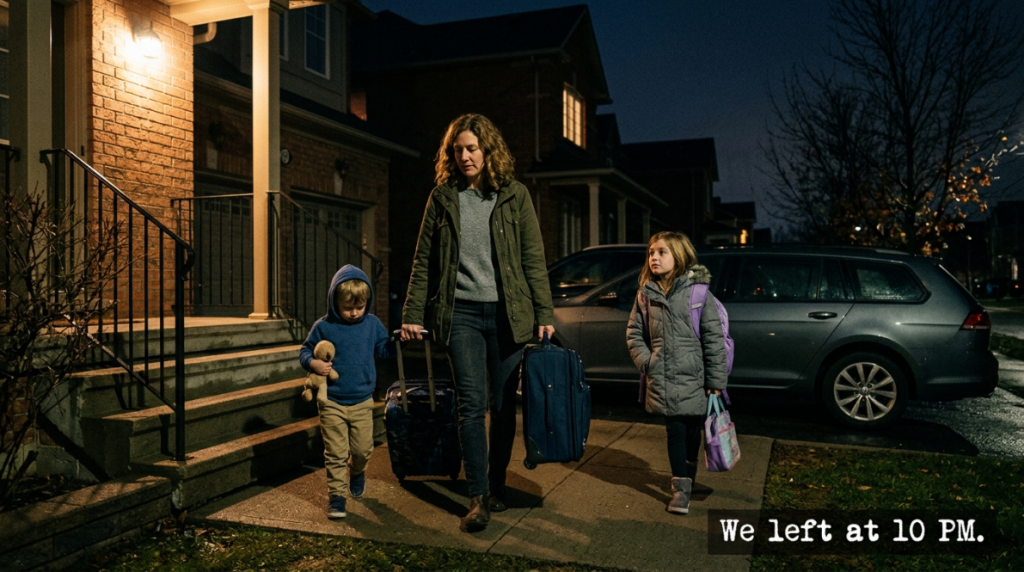
I left at ten o’clock that night.
Two days later, she discovered what I had canceled.
But what she didn’t understand was that I hadn’t canceled Thanksgiving.
I had canceled the old rules.
The rules that said the loudest person got the best room.
The rules that said the person who complained most deserved the most.
The rules that said I would always clean up the mess.
The rules that said being family meant tolerating anything.
Those rules ended that night.
And in their place, we built something better.
Something where apologies mattered.
Where boundaries were respected.
Where everyone contributed.
Where children never wondered whether they belonged.
And where there was always a seat at the table.
Not because someone owed you one.
But because you were loved.
That was the real Thanksgiving gift.
Not the lodge.
Not the dinner.
Not the reservation.
Not the money.
It was learning that sometimes you have to leave the table…
before you can finally build one where everyone has a place.